New Study Reveals Dinosaurs Thrived Until Asteroid Impact, Alters Extinction Timeline
January 18, 2026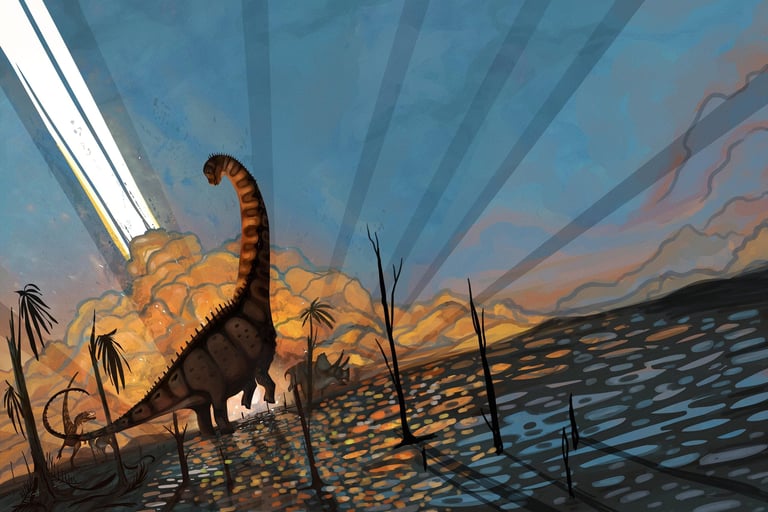

New dating of Naashoibito Member fossils in the Kirtland Formation of northwestern New Mexico places these dinosaurs between roughly 66.4 and 66 million years old, showing they coexisted with Hell Creek dinosaurs shortly before the asteroid impact.
The asteroid impact triggered a rapid extinction, but within about 300,000 years mammals diversified to fill ecological roles, with northern and southern communities remaining distinct, echoing prior bioprovinces.
Beyond history, the study highlights ecosystem resilience and vulnerability, and underscores the value of protected public lands for studying rapid global change.
The research identifies distinct regional dinosaur bioprovinces in western North America driven by temperature, indicating healthy and diverse ecosystems rather than a uniform regional decline.
The record indicates North American dinosaur populations were thriving up to the Cretaceous-Paleogene boundary, challenging the idea of an impending, gradual pre-extinction downturn.
Published in Science, the 2025 study titled Late-surviving New Mexican dinosaurs illuminate high end-Cretaceous diversity and provinciality involves researchers from multiple universities and institutions, with support from NSF, ERC, and other grants.
The findings recast dinosaur extinction as a rapid, cataclysmic event rather than a slow, gradual decline, reshaping our understanding of how mammal diversification and early Paleocene ecosystems emerged in the wake of the catastrophe.
Summary based on 1 source
Get a daily email with more Science stories
Source
SciTechDaily • Jan 18, 2026
Scientists Just Rewrote the Story of the Dinosaurs’ Final Days