Yale and Boehringer Ingelheim's AI Platform Revolutionizes Chemical Synthesis with 71% Success Rate
January 19, 2026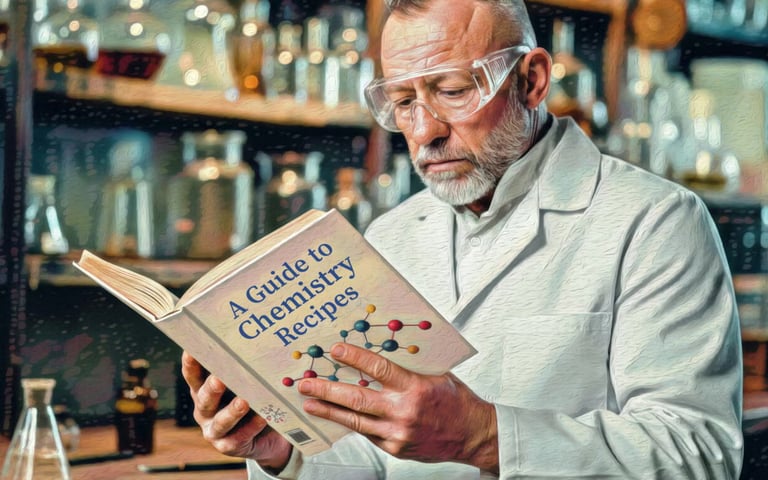


The platform leverages 2,498 individual AI experts, each representing knowledge from a leading practitioner in a specific chemistry domain, enabling expert-driven guidance across diverse reaction spaces.
These experts are organized within Voronoi-clustered spaces and run on the Llama-3.1-8B-instruct architecture to cover a wide range of transformations.
Key affiliations include Yale University and Boehringer-Ingelheim, with corresponding authors Tim Newhouse and Victor Batista among the principal contributors.
Contributors span Yale and Boehringer-Ingelheim, including Victor Batista, Timothy Newhouse, Haote Li, and Sumon Sarkar, with funding from Boehringer-Ingelheim and the National Science Foundation Engines Development Award.
MOSAIC is an AI-powered platform at Yale, developed with Boehringer Ingelheim, that generates experimental procedures for chemical synthesis, including compounds that do not yet exist.
It operates as a computational framework that taps into millions of reaction protocols to enable AI-assisted chemical synthesis.
The article notes that this is a pre-publication manuscript and emphasizes early access to findings while further edits are underway before final publication.
MOSAIC provides measurable uncertainty estimates to indicate how closely a user’s request fits an expert’s domain, helping prioritize experiments.
The system aims to turn knowledge overload into actionable lab procedures by enabling researchers to consult multiple niche experts rather than relying on a single large model.
The approach enables discovery of over 35 novel compounds across pharmaceuticals, materials, agrochemicals, and cosmetics through AI-guided synthesis.
MOSAIC delivers reproducible and executable experimental protocols with confidence metrics, reporting an overall experimental success rate of about 71%.
Summary based on 2 sources
Get a daily email with more AI stories
Sources
Yale News • Jan 19, 2026
New ‘recipes’ for accelerating chemistry discoveries – with a dash of AI