Austrian Cow Veronika Uses Brush as Tool, Challenging Views on Livestock Cognition
January 19, 2026


Researchers conducted controlled observations to rule out trained tricks or AI-generated content, confirming intentional tool use.
Initial skepticism about the behavior gave way to evidence of purposeful use of tools to reach various body parts.
The accompanying visual material and paywalled full article are noted, with context about Le Monde and related pieces.
Researchers analyzed a cow named Veronika from Austria and found she uses a brush as a tool to scratch hard-to-reach areas, demonstrating flexible, context-dependent tool use.
Environmental and social factors—such as Veronika’s age, open environment, daily human contact, and access to manipulable objects—may foster this behavior, suggesting such abilities could be more widespread than currently documented.
Veronika’s case contributes to a broader shift in studying animal cognition beyond primates and certain birds, implying livestock may possess more sophisticated minds than traditionally assumed.
Research links beliefs about animal minds to ethics and edibility judgments, highlighting practical implications for animal welfare and policy.
DOI and publication details place the study in Current Biology, 2025.
The author frames this discovery as part of growing awareness of animal cognition and stresses the need to confront cognitive biases to improve human-animal relations.
A companion, Witgar Wiegele, observed the behavior over a decade, underscoring the importance of open-environment observation to reveal cognitive abilities.
The finding adds scientific interest to the idea of cows using tools, echoing the cultural nod seen in Gary Larson’s cow tools concept.
The study places this finding in the history of animal tool use, comparing it to examples from cockatoos, dolphins, and crows, challenging the notion that tool use is unique to humans and a few species.
Summary based on 21 sources
Get a daily email with more Science stories
Sources

The Guardian • Jan 19, 2026
Back-scratching bovine leads scientists to reassess intelligence of cows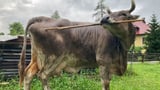

Ars Technica • Jan 19, 2026
Meet Veronika, the tool-using cow
Scientific American • Jan 19, 2026
First-ever flexible tool use seen in a cow suggests livestock are smarter than believed