Study Reveals Gut Bacteria's Role in Aging and Tissue Regeneration
January 22, 2026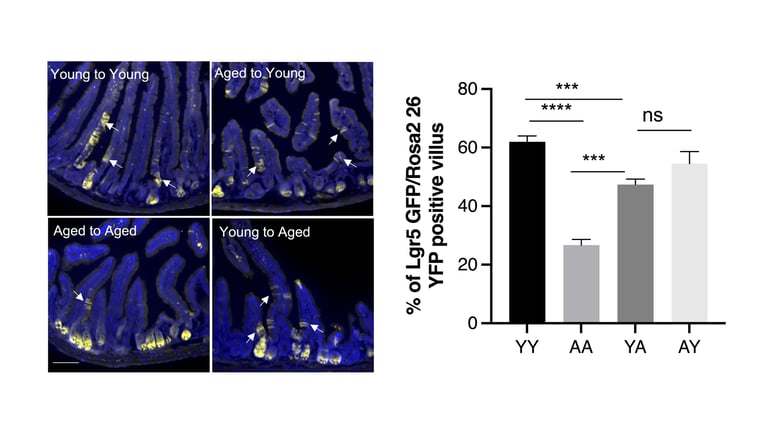

Probiotics remain popular in the wellness market, with brands such as Seed and Lemme cited, marketed for digestion, skin health, and cognitive and mood benefits, though effectiveness varies by strain and individual.
Akkermansia muciniphila increases with age and, when given to old mice, further suppresses the Wnt pathway and impairs stem cell regeneration, highlighting specific microbial effects on aging.
Microbiota composition differences between young and aged mice correlate with the decline in ISC function.
Researchers observed distinct differences in gut microbiota composition between young and aged mice that align with ISC activity levels.
Publication details: Stem Cell Reports, 2026, DOI: 10.1016/j.stemcr.2025.102788, article titled “Microbiota from young mice restore the function of aged ISCs.”
Overall, microbiota-targeted therapies could help preserve intestinal homeostasis, boost regeneration, and promote healthy aging.
A new study links aging gut bacteria to a reduced body-wide capacity to repair itself, showing the gut microbiome plays a central role in tissue regeneration and aging.
The findings indicate gut microbiota regulate intestinal stem cell (ISC) function, and aging-related stem cell decline can be reversed by modulating the microbial environment.
In old mice, intestinal stem cells are less active than in young mice, reducing cell replenishment and weakening regeneration after injury.
The study points to host-microbe interactions as a therapeutic target to preserve intestinal function, enhance regeneration, and support healthy aging.
Interventions to reset the microbiome toward a more youthful state may be necessary beyond adding probiotics, with implications for aging and chronic disease therapies.
Summary based on 3 sources
Get a daily email with more Science stories
Sources

Medical Xpress • Jan 22, 2026
Microbial shifts in the gut drive intestinal stem cell aging, but reversal is possible
News-Medical • Jan 22, 2026
Age-related changes in the gut microbiota impair intestinal stem cell function