Breakthrough Iron-Based Nanoagent Achieves Complete Tumor Regression Without Harm to Healthy Cells
January 27, 2026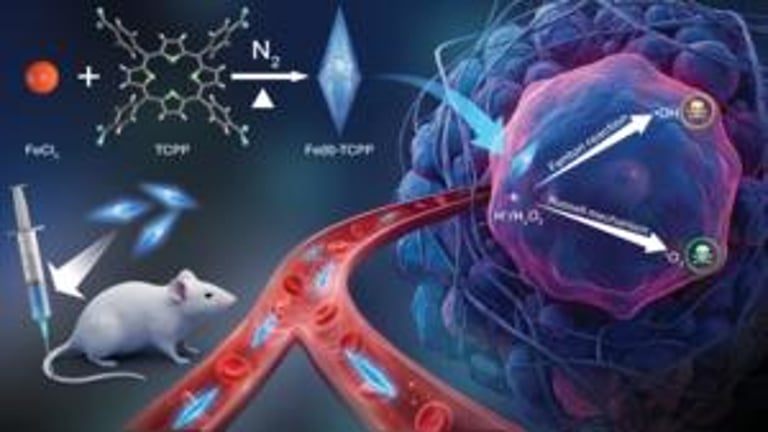

Researchers plan to expand testing across multiple cancer types, including aggressive pancreatic cancer, to demonstrate broad applicability before initiating human trials.
The MOF shows superior catalytic efficiency over existing chemodynamic therapy agents and exhibits potent toxicity to cancer cell lines while sparing noncancerous cells.
The study is led by Oleh and Olena Taratula and Chao Wang from Oregon State University, with publication in Advanced Functional Materials published around late January 2026.
This nanoagent overcomes a limitation of CDT by delivering both ROS types with higher catalytic efficiency, potentially improving the durability of tumor regression.
A new iron-based MOF nanoagent has been engineered to simultaneously generate hydroxyl radicals and singlet oxygen, triggering oxidative stress to kill cancer cells while sparing healthy tissue.
In treated mice, the approach achieved total tumor regression and long-term prevention of recurrence, with no adverse effects observed on noncancerous cells.
In mouse models using human breast cancer cells, systemic administration enabled tumor accumulation, robust ROS generation, complete tumor eradication, and no systemic toxicity.
Summary based on 2 sources
Get a daily email with more Science stories
Sources
Phys.org • Jan 27, 2026
Novel nanomaterial uses oxidative stress to kill cancer cells
EurekAlert! • Jan 27, 2026
New cancer-killing material developed by Oregon State University nanomedicine researchers