Ancient Shoreline Discovery in Jezero Crater Suggests Mars Once Hosted Life-Supporting Conditions
January 28, 2026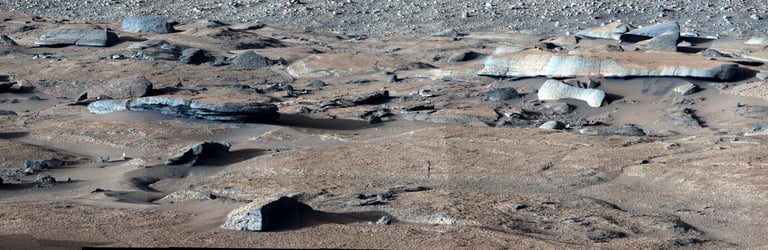

The research builds on prior work suggesting a younger perched lake at Jezero, together painting a more intricate, water-rich history for the crater and its potential to preserve biosignatures.
A study from Imperial College London using NASA's Perseverance data finds wave-formed beaches and rock altered by subsurface water in Jezero crater’s Margin unit, indicating an ancient shoreline and extended habitable conditions.
The Margin unit preserves signs of extensive underground rock-water interactions and contains definitive traces of an ancient shoreline, pushing back when Jezero could have hosted life-supporting conditions.
Three Margin unit core samples and one from the Bright Angel formation are planned for return to Earth under the Mars Sample Return mission for precise dating, carbonate-climate analysis, and biosignature searches.
The new results complement earlier findings and strengthen the view that Jezero hosted sustained water-rock interaction and multiple lake phases, increasing its prospects for past habitability.
Beyond shorelines, the upstream Bright Angel formation shows thick mudstone deposits, implying a dammed lake existed upstream and adding to Jezero’s complex hydrologic history.
Lower-elevation Margin unit contains layered sandstones with rounded olivine and carbonate grains, clearly indicating shoreline processes and a former beach within the crater.
Lead author notes that shorelines are habitable environments on Earth and carbonate minerals can preserve environmental records, underscoring the importance of these Martian deposits.
Perseverance observations suggest the Margin unit began as igneous rock altered by carbon dioxide-rich groundwater, transforming olivine into iron- and magnesium-carbonates and revealing prolonged water-rock interaction.
The findings imply surface water persisted in Jezero with a large lake about 3.5 billion years ago, supporting past habitability.
The study extends the potential habitability window at Jezero farther back in time, aligning calm, lake-bearing conditions with an ancient shoreline beneath a river delta.
The research, published in the Journal of Geophysical Research: Planets in 2026, reinforces Jezero crater as an ideal site to investigate past habitability and the possibility that life may have emerged there.
Summary based on 2 sources
Get a daily email with more Science stories
Sources

Phys.org • Jan 27, 2026
Ancient Martian beach discovered, providing new clues to red planet's habitability
Slashdot • Jan 28, 2026
Ancient Martian Beach Discovered, Providing New Clues To Planet's Habitability - Slashdot