New Dinosaur Discovery: Haolongdongi Reveals Unique Hollow Spikes in Skin, Broadens Understanding of Dinosaur Integument
February 22, 2026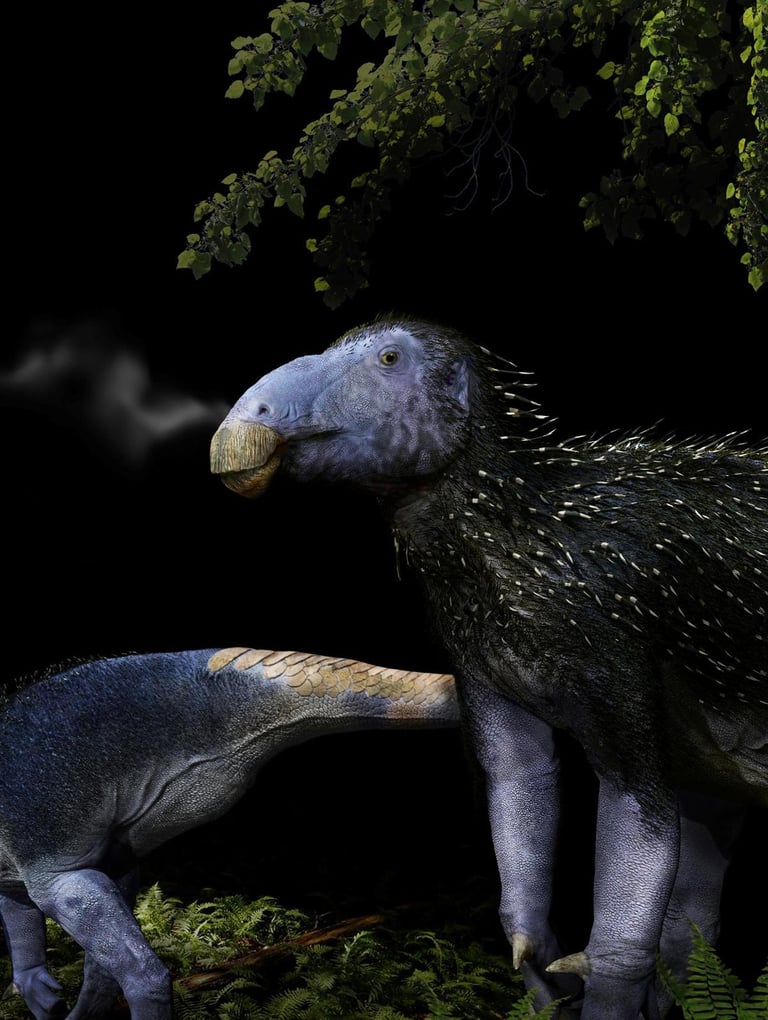

A newly described iguanodontian dinosaur named Haolongdongi reveals hollow, cutaneous spikes embedded in its skin, marking the first observation of hollow spines in a dinosaur.
The fossil, found in Anhui, preserves keratin cores within the spines and represents the first spiky, hollow-spined iguanodontid discovery.
Dating to about 125 million years ago, the well-preserved skin of Haolongdongi from northeastern China shows hollow spines and horn-like projections along parts of the body.
The study detailing these findings was published in Nature Ecology & Evolution and summarized by the University of Rennes.
Researchers, including CNRS scientists from Géosciences Rennes, note that the relationship between such skin structures and feathers or plumes in dinosaurs remains an open question.
The spines likely served multiple roles, including defense against predators, thermoregulation by increasing surface area for heat exchange, and possibly sensory perception.
Proposed functions of the spikes include deterring predators, aiding heat management, and potentially supporting environmental perception; the structures are not solid bone extensions.
Further research is needed to determine whether adult Haolongdongi retained the hollow spikes and to fully understand their range of functions.
This discovery broadens the known diversity of dinosaur skin coverings and suggests greater architectural variety in integument than previously documented, with implications for understanding dinosaur biology.
Haolongdongi measured about 2.5 meters in length and was a herbivore; its spines may have provided protection and possibly thermoregulation for juveniles and adults alike.
Haolongdongi was described as a new iguanodontian species from China in a February 2026 publication in Nature Ecology & Evolution.
The findings were published on February 6, 2026, in Nature Ecology & Evolution, led by Jiandong Huang and colleagues.
Summary based on 3 sources
Get a daily email with more Science stories
Sources
ScienceDaily • Feb 18, 2026
125 million-year-old dinosaur with never before seen hollow spikes discovered in China
SciTechDaily • Feb 22, 2026
This 125 Million-Year-Old Dinosaur Had Spikes Like a Porcupine