Ancient Comb Jellies Illuminate Nervous System Evolution with New Colombian Discoveries
February 23, 2026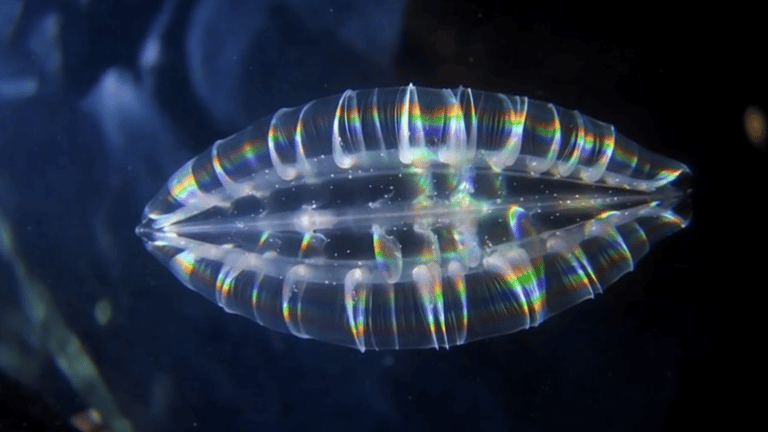

Recent surveys expand regional biodiversity records for the Caribbean coast of Colombia and provide visual documentation archived for future reference, avoiding specimen collection due to fragility.
A Colombian research team documented 15 ctenophore species in Colombian waters, including six not previously recorded in the region, using non-destructive underwater photography and field observations.
A 2022 Pristine Seas expedition documented 15 ctenophore species in Colombia, with six first records for the country, employing non-invasive photography due to their delicate gelatinous nature.
A recent study off the Colombian coast reports 15 ctenophore species, six newly recorded for the region.
New evidence from Cambrian-era ctenophore fossils suggests ancient nervous and sensory structures, and some species exhibit bioluminescence, broadening understanding of their biology and behavior.
Ctenophores have a global distribution from surface waters to abyssal depths, with ongoing research focusing on aging, regeneration, and neural evolution in these ancient animals.
Comb jellies, or ctenophores, are ancient plankton whose lineage dates back over 500 million years and may represent an early-branching animal group, with implications for understanding nervous system evolution and animal origins.
The findings address a historical information gap about gelatinous plankton in the region and demonstrate the value of non-invasive exploration for understanding marine biodiversity.
Advances in genomics, high-resolution imaging, and AI-powered analysis are helping overcome sampling challenges and reveal ctenophore diversity, evolution, and potential regenerative and neural features.
Feeding relies on colloblasts that release a sticky adhesive to capture prey such as fish eggs, larvae, and plankton, while some species repurpose nematocysts from consumed cnidarians for defense and hunting.
Ctenophores move and glow via eight rows of cilia (ctenes) that diffract light to produce iridescent colors, with sizes ranging from centimeters to over a meter.
Ecologically, ctenophores are carnivores that feed on plankton and small organisms, helping regulate populations and forming a key link in marine food webs.
Summary based on 3 sources
Get a daily email with more Science stories
Sources
The Times Of India • Feb 23, 2026
Colombian sea creature reveals origins of complex ocean life 500 million years ago
Nature World News • Feb 18, 2026
Alien Glow in Colombian Seas: Pristine Seas Unveils Ancient Comb Jellies Older Than Dinosaurs
Indian Defence Review • Feb 20, 2026
Scientists Find Alien-Like Creatures in Colombia’s Oceans, and They're Older than Dinosaurs!