Astronomers Capture Most Detailed Image of Milky Way's Star-Forming Heart
February 26, 2026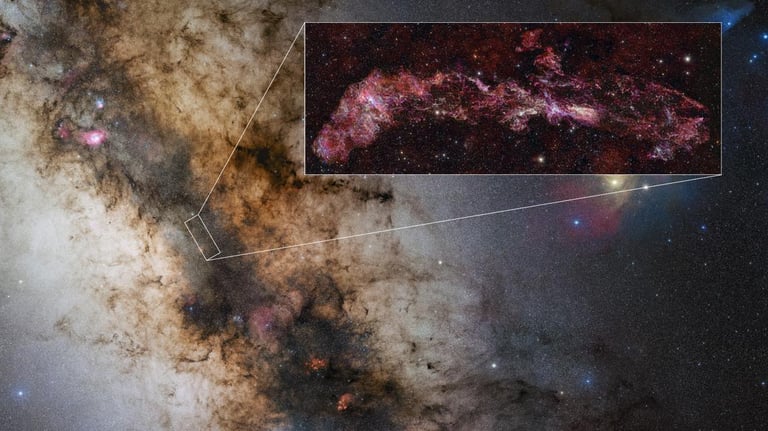


Astronomers using the ALMA network in Chile captured the most detailed image yet of the Central Molecular Zone, the region of cold gas and dust surrounding the Milky Way’s supermassive black hole at the galactic center.
The image reveals swirling filaments of star-forming gas spanning more than 650 light-years, providing unprecedented detail on how stars form in extreme galactic environments.
ESO and collaborators describe the CMZ as extreme and invisible to the naked eye, now disclosed in extraordinary detail, underscoring the significance of the discovery.
The effort is a collaboration involving the European Southern Observatory and contributes to broader knowledge about star formation in challenging galactic environments.
The findings will be published in multiple Monthly Notices of the Royal Astronomical Society articles, with the ESO press release dated February 25, 2026.
The ALMA CMZ Exploration Survey (ACES) brings together over 160 scientists from 70 institutions, delivering preliminary findings across five papers and aiming to build a 3D map linking large-scale gas flows to star formation and destruction.
Key figures include Katharina Immer of ESO/ALMA and Steve Longmore of Liverpool John Moores University, highlighting CMZ’s importance for understanding galactic history.
Researchers note a complex network of gas filaments feeding star-forming regions, a process tied to star formation from cold molecular gas along filaments.
The CMZ houses some of the galaxy’s most massive stars under extreme conditions, and studying it could illuminate galaxy and universe evolution.
ESO astronomers emphasize the unexpected richness and complexity of the final mosaic, reflecting the survey’s ambitious goals and the extraordinary region.
This achievement showcases the capabilities of the ALMA network in the Atacama Desert and its role in advancing understanding of star formation and galactic history.
ALMA mapped an area roughly the size of three full moons, the largest imaged region to date, stitched together from many observations into a mosaic.
Summary based on 11 sources
Get a daily email with more World News stories
Sources
Yahoo News • Feb 25, 2026
Swirling beauty of the Milky Way galaxy's heart is captured in a new telescope picture
AP News • Feb 25, 2026
Heart of Milky Way galaxy shines in new image | AP News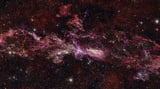
Live Science • Feb 25, 2026
'A place of extremes': Scientists unveil the largest-ever map of the galaxy's chaotic center