Rutgers Study Reveals Bedrock, Not Glaciers, as Key Iron Source to Southern Ocean
February 27, 2026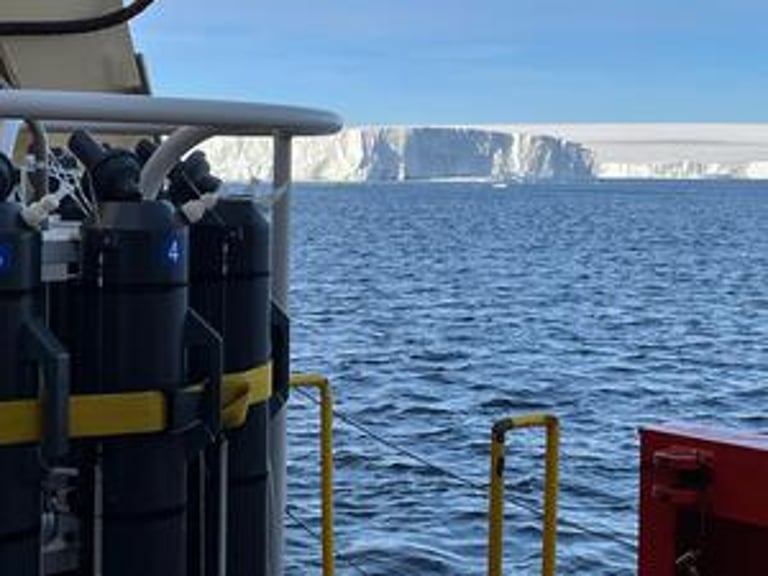

A Rutgers-led study challenges the long-standing view that Antarctic glacier meltwater is the dominant source of bioavailable iron to the Southern Ocean, a finding with implications for iron-fertilization theories and climate predictions.
Isotopic analyses reveal a subglacial liquid meltwater layer beneath the glacier with low dissolved oxygen, promoting dissolution of bedrock iron oxides and pointing to a significant bedrock source of iron rather than ice-shelf melt.
Lead author Venkatesh Chinni of Rutgers, supported by Rob Sherrell, with collaborators Jessica Fitzsimmons and Janelle Steffen of Texas A&M and Tim Conway of the University of South Florida contributing isotopic work.
Researchers suggest climate models and forecasts of phytoplankton blooms and carbon sequestration in the Southern Ocean may need revision, as glacier-driven iron fertilization appears less influential than previously thought.
Published in Communications Earth & Environment, the study is described as the most accurate measurement to date of iron inputs from an Antarctic glacier and was released February 26, 2026.
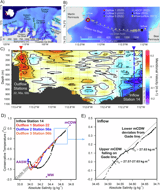
At Dotson Ice Shelf in the Amundsen Sea, meltwater accounts for about 10% of dissolved iron exiting the cavity; most iron comes from inflowing deep water (62%) and shelf sediments (28%).
The Dotson study, conducted during a 2022 expedition aboard the Nathaniel B. Palmer with analyses by Rutgers, Texas A&M, and the University of South Florida, combined ship-based measurements and isotopic data.
Methods included ship-based CTD surveys, velocity profiling, dissolved and particulate iron measurements, and iron isotope analysis to identify upper mCDW as the primary driver of meltwater input and the main source of outflow dissolved iron.
The broader Southern Ocean context remains critical: iron availability is closely tied to phytoplankton activity and the region's role as a major biological region and carbon sink.
Researchers call for further work to understand subglacial processes and to quantify iron fluxes across different Antarctic regions and times, noting caveats and the need for broader investigation.
The study's findings draw on a collaboration across multiple U.S. institutions and UK partners, highlighting a broader network of researchers.
Isotopic signatures show inflowing upper mCDW carrying crustal-like iron-56 and lighter outflow dissolved iron, indicating iron reduction within sediments as a key source to the outflow plume.
Summary based on 5 sources
Get a daily email with more Science stories
Sources
EurekAlert! • Feb 26, 2026
Will melting glaciers slow climate change? A prevailing theory is on shaky ground
SciTechDaily • Feb 26, 2026
Scientists Thought Antarctic Ice Melt Helped Fight Climate Change. It Doesn’t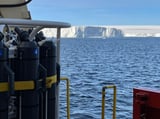
Mirage News • Feb 26, 2026
Melting Glaciers' Role in Climate Change Questioned