NASA's DART Mission Successfully Shifts Asteroid Orbit, Proving Planetary Defense Viability
March 6, 2026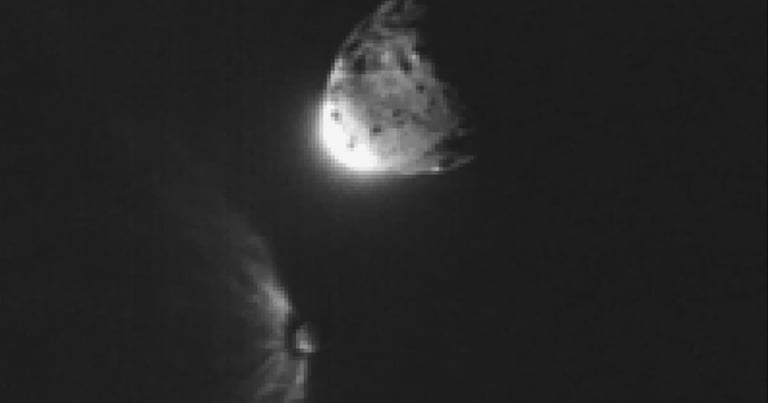


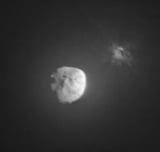
NASA’s DART mission deliberately struck the small moonlet Dimorphos to test planetary defense, and subsequent observations show the two-asteroid system’s orbit around the Sun was shifted slightly, by roughly 0.15 seconds over two years.
The deflection stemmed from momentum transfer from the spacecraft and a substantial push from ejecta—rock and dust released during impact—effectively doubling the momentum applied to Dimorphos.
Scientists achieved high precision by integrating radar, stellar occultations, and ground-based data, with 22 recorded occultations between late 2022 and early 2025 helped by volunteers worldwide.
Earth remains well outside the altered system’s approach path for the foreseeable future, validating the concept of tiny, long-term nudges over dramatic, last-minute pushes.
The trajectory change is well short of Earth at all times, underscoring the method’s viability for future deflection missions.
The findings bolster confidence in our ability to influence potentially threatening asteroids and provide a crucial benchmark for predicting outcomes of future kinetic impactor missions.
Europe’s Hera mission will arrive later this year to study Dimorphos and Didymos, independently verifying DART’s impact effects and crater formation.
Hera will perform in-situ measurements and refine measurements of the system, potentially including landers, without interfering with the asteroids themselves.
Lead author Rahil Makadia notes that even a tiny shove early on can accumulate over decades to influence long-term asteroid threats.
Density estimates suggest Dimorphos is less dense and resembles a rubble-pile, while Didymos is denser, affecting how deflection strategies work for such binary, rocky bodies.
The Dimorphos–Didymos system serves as a testbed for deflection, with Dimorphos about 160 meters across and Didymos around 780 meters, markedly more massive.
DART, built and operated by Johns Hopkins APL for NASA, marked humanity’s first mission to intentionally move a celestial object and to alter a binary system’s solar orbit.
Summary based on 12 sources
Get a daily email with more World News stories
Sources
NASA • Mar 6, 2026
NASA’s DART Mission Changed Orbit of Asteroid Didymos Around Sun - NASA
Ars Technica • Mar 6, 2026
Asteroid defense mission shifted the orbit of more than its target