Gaia Data Unveils Massive Stellar Migration: Sun's Journey from Galactic Center Revealed
March 12, 2026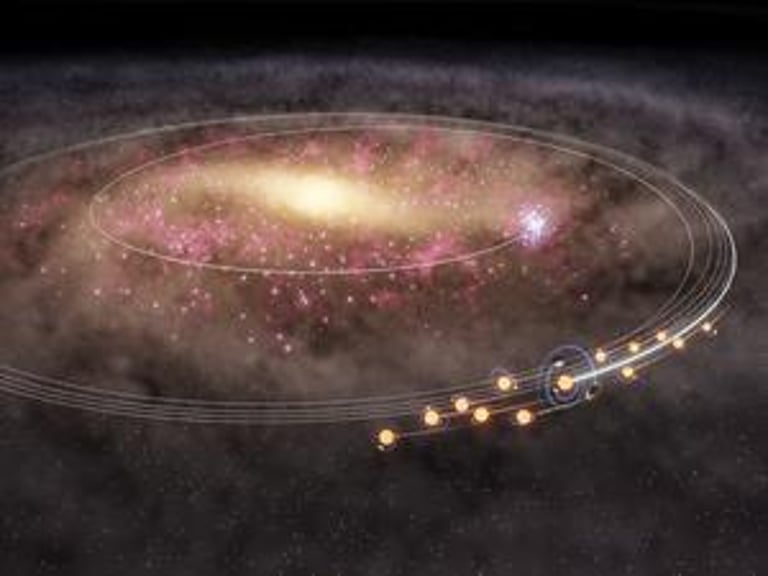

Two parallel studies using Gaia data identify 6,594 solar twin stars within about 1,000 light-years and reveal an age distribution with a local peak around two billion years and a broad 6–4 billion-year peak that includes the Sun, suggesting widespread outward migration of stars from the galactic center.
The results imply the Sun was not always at its current distance from the galactic center, pointing to a major stellar migration in the Milky Way’s history.
Researchers propose a large-scale outward migration from the crowded center over billions of years, bringing the Sun and many solar twins into the outer disk.
If confirmed, the results could constrain the epoch of the Galactic bar’s formation and shed light on the Sun’s birthplace and the environmental history of life-supporting planets.
The Sun’s current position and potential for life-friendly development may reflect broader galactic evolution rather than mere chance.
Outward migration may be linked to the Milky Way’s central co-rotation bar, which could have concentrated gas to spur star formation and then propelled stars outward.
The bar’s formation, estimated around several billion years ago, may have boosted star formation and facilitated outward migration by altering stellar orbits.
The findings may illuminate when and how the Milky Way’s central bar formed and how a corotation barrier could have influenced such mass migration.
Some scientists warn about sample-selection biases in interpreting the broad age peak, though the team argues they accounted for distance and orbital biases, with ongoing debates on exact timescales.
This work advances galactic archaeology by linking solar twin ages to the Sun’s past location and the evolution of the Galaxy’s central bar.
The study addresses how the Sun could move outward despite the bar acting as a barrier, suggesting the barrier formed after outward migration began.
The research relies on Gaia (and 2MASS) data and has support from Tokyo Metropolitan University, JSPS KAKENHI, and the EU SPACE-H2020 EXPLORE project.
Summary based on 4 sources
Get a daily email with more Science stories
Sources
Scientific American • Mar 12, 2026
The sun and thousands of its twins migrated across the Milky Way just in time
Live Science • Mar 12, 2026
A 'mass migration' of stars from the Milky Way's center could explain why there's life in our solar…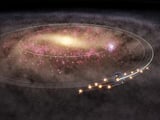
EurekAlert! • Mar 12, 2026
We are not alone: Our Sun escaped together with stellar “twins” from galaxy center