Breakthrough Study Reveals Self-Organizing Nervous Systems in 'Neurobots' with Potential Medical Applications
March 16, 2026

A new study explores how a nervous system can develop in a novel, non-evolutionarily selected context, with potential implications for neuroscience, tissue engineering, regenerative medicine, and programmable biological entities.
The project investigates how simple neural networks can organize within a new biological body to guide development and function, with potential benefits for tissue engineering and medical therapies.
Neural integration occurs spontaneously in a novel context, with neurons extending to surface cells; future work includes validating protein-level expression, mapping single-cell identities, and testing sensory-evoked behaviors.
Researchers used pentylenetetrazole (PTZ) to modulate neural activity by inhibiting GABA-A receptors, revealing different effects on neurobots versus non-neuronal biobots.
Gene expression analyses show upregulation of nervous system development genes and surprisingly many visual system-related genes, hinting at visually-evoked responses and potential light-guided behavior.
Activation of brain receptor genes and visual-perception pathways raises questions about future photoreceptive capabilities and light sensitivity in these systems.
Neurobots are living cellular robots created by integrating neuronal precursor cells into Xenopus laevis-derived biobots, producing self-organizing nervous systems that influence morphology, movement, and gene expression.
Neurons influence behavior: neurobots grow larger and more elongated, exhibit more complex movement, and respond differently to stimuli compared with non-neural biobots.
The study involves Michael Levin, Haleh Fotowat, and teams at the Wyss Institute, Tufts University, and the University of Vermont, with support from the DoD, John Templeton Foundation, and Northpond Ventures.
Calcium imaging and synapse-related protein markers confirm functional neural activity within neurobots, indicating emerging neural coordination.
Researchers frame the work as a reverse-engineering effort to uncover fundamental rules of nervous system formation and to probe future applications in synthetic biology and regenerative medicine.
A key challenge is delineating neural circuits for different behaviors, understanding how neurons affect target cell physiology, and validating sensory modalities at the protein and functional levels.
Summary based on 5 sources
Get a daily email with more Science stories
Sources

EurekAlert! • Mar 16, 2026
Toward autonomous self-organizing biological robots with a nervous system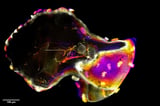
Newswise • Mar 16, 2026
Scientists Create a Novel Organism with a Primitive Nervous System | Newswise
Mirage News • Mar 16, 2026
Autonomous Bio-Robots with Nervous System Development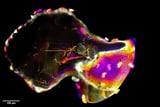
Tufts Now • Mar 16, 2026
Scientists Create Novel Organism with Primitive Nervous System