Asteroid Ryugu's Nucleobase Discovery Fuels Debate on Life's Cosmic Origins
March 16, 2026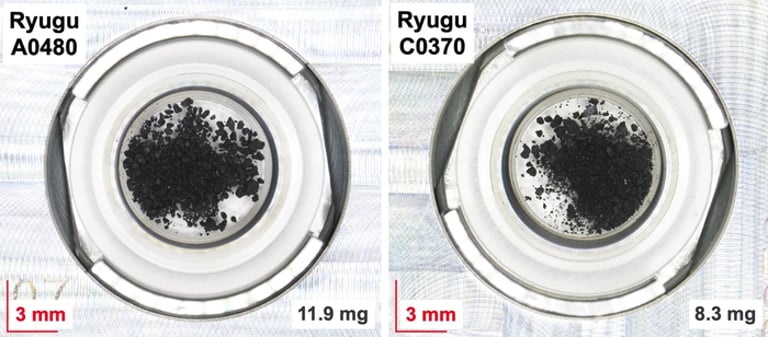


Collectively, the results reinforce the idea that space-based chemistry contributed essential ingredients for life and may have relevance to Earth’s own origins.
A new study finds that samples from the Ryugu asteroid contain all five canonical nucleobases—adenine, guanine, cytosine, thymine, and uracil—indicating that prebiotic chemistry could form in space.
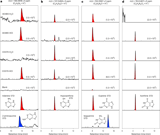
Comparative analysis shows distinct base compositions among Ryugu, Bennu, and meteorites like Murchison and Orgueil, reflecting different chemical histories of their parent bodies.
Previous detections of nucleobases in meteorites and Bennu suggest these molecules are widespread in extraterrestrial materials, though their abundances vary.
Access to the article is limited to subscribers, with additional content gated behind a paywall.
Researchers employed rigorous extraction, blanks, and multiple orthogonal analytical techniques to confirm identifications and rule out terrestrial contamination.
Experts caution that detecting nucleobases alone does not explain life’s origin; formation of nucleotides and the potential for self-replication must be demonstrated to trace a plausible path to life.
The study underscores the value of continued domestic space exploration and sample-return missions for Korea, highlighting potential policy and technology pathways for participation in similar research.
Findings suggest a dynamic and varied history of organic synthesis in early solar-system environments, implying space-based chemical evolution could supply life’s precursors without biology.
The formal identification of nucleobases in extraterrestrial material supports theories that life’s building blocks could arise through chemical evolution beyond Earth.
A notable correlation emerges between nucleobase ratios and ammonia concentrations, hinting at an unknown formation pathway for nucleobases in early Solar System materials.
Specifically, higher ammonia content tends to align with a lower purine-to-pyrimidine ratio, suggesting ammonia influences nucleobase composition beyond current models.
Summary based on 12 sources
Get a daily email with more World News stories
Sources
Nature • Mar 16, 2026
A complete set of canonical nucleobases in the carbonaceous asteroid (162173) Ryugu
Gizmodo • Mar 16, 2026
Asteroid Ryugu Contains All 5 DNA and RNA Building Blocks, Study Shows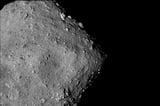
New Scientist • Mar 16, 2026
The asteroid Ryugu has all of the main ingredients for life