Study Reveals Neolithic Dogs' Ancient Roots and Early Human Partnership
March 25, 2026


A second study of 216 canid skeleton genomes shows European Neolithic dogs, about 6,000 years old, descended from hunter-gatherer dogs dating back over 14,000 years, suggesting domestication predates the agricultural shift in Europe and may have begun earlier in Asia.
Puppies buried above human graves in Pinarbasi illustrate a close, evolving relationship between early dogs and their human communities.
Together, these findings indicate that dog evolution involved long-range migrations, interbreeding, and significant human influence, moving scientists closer to pinpointing when humans first formed partnerships with dogs.
The News & Views piece is authored by Lauren M. Hennelly and Mikkel-Holger S. Sinding, who synthesize and analyze the new data.
The piece references related studies and provides citations to the primary Nature articles and supplementary materials.
The research is framed within a broader genomic and paleoanthropological context, linking to prior work on ancient genomes and dog domestication.
Researchers emphasize dogs’ broad mobility and ongoing exchange with humans, noting their roles as humans moved across vast regions.
Isotopic analysis shows Turkish dogs had fish-rich diets aligned with human diets, a pattern seen at other sites, suggesting deliberate human feeding practices.
The study reframes the domestication timeline, proposing earlier and more complex diffusion with multiple waves of canine ancestry shaping today’s dogs.
Researchers note the difficulty of distinguishing dogs from wolves in skeletal remains without advanced genetic tools, underscoring the value of ancient DNA methods.
This emphasis on genetic techniques reflects the ongoing challenge of accurately identifying early dogs and understanding their relationships to humans.
Experts caution that domestication likely began earlier outside Europe and that the canine record reflects a multi-generational process rather than a single origin event, with possible interbreeding and mislabeling of fossils.
Summary based on 21 sources
Get a daily email with more World News stories
Sources

The Guardian • Mar 25, 2026
Bond between dogs and humans dates back more than 15,000 years, study finds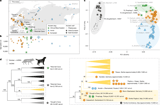
Nature • Mar 25, 2026
Dogs were widely distributed across western Eurasia during the Palaeolithic
Nature • Mar 25, 2026
Who let the wolves in? Genetic record for domestic dogs pushed back by 5,000 years
Nature • Mar 25, 2026
Dogs have deep genetic roots in ice-age Europe