AI-Powered Concept Graphs Predict Future Trends in Materials Science Research
April 1, 2026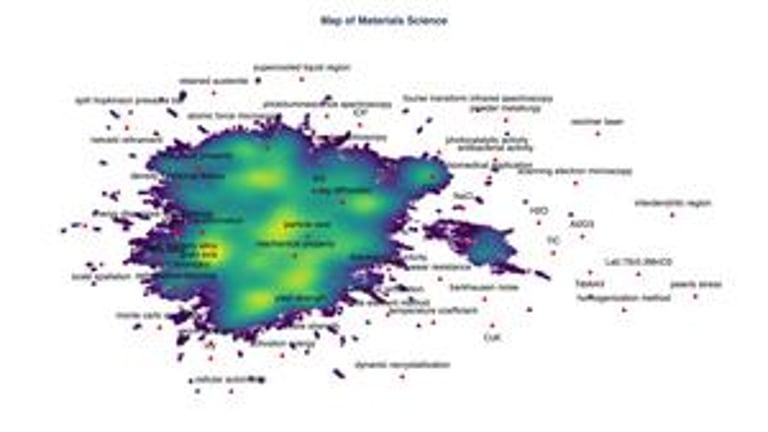


A KIT-led study uses large language models and concept graphs to extract concepts from 221,000 abstracts and forecast novel concept pairings in materials science, aiming to predict emerging research directions.
Researchers demonstrate that AI-driven literature analysis can reveal trends with potential applicability to other scientific fields beyond materials science.
Beyond prediction, the method offers interpretable, interactive visualizations that help experts trace rationale, linkages, and assess robustness of hypotheses.
The approach fuses LLM-derived embeddings with graph theory to transform textual data into a dynamic knowledge map, enabling visualization of relationships and the tracking of how concepts connect over time.
The authors stress that AI-assisted ideation should augment human creativity, noting that some ideas initially dismissed may become valuable with further development, while acknowledging limitations like a small expert sample size.
Ethical considerations emphasize transparency, safeguards against bias reinforcement, and a push toward open, collaborative tool development.
The algorithm fuses LLM embeddings with graph theory to populate a dynamic knowledge map, updating as new data arrive and linking concepts through multidimensional vectors.
Analysis shows most emerging links form between nodes two to three steps apart, and combining semantic data with structural graph features improves predictions for more distant connections.
The tool highlights underexplored topic combinations with potential for future interdisciplinary collaboration, validated by expert interviews.
Concept graphs provide structured networks of concepts and interrelations to capture causal links, co-occurrence patterns, and thematic connections within the literature.
The tool is designed to support scientific creativity rather than replace researchers, guiding where to look and who to collaborate with.
Limitations include dependence on input data quality and biases in the literature, publication delays, and the need for experimental validation of computational forecasts.
Summary based on 4 sources
Get a daily email with more AI stories
Sources
EurekAlert! • Apr 1, 2026
AI inspires new research topics in materials science
BIOENGINEER.ORG • Apr 1, 2026
New Research Directions in Materials Science with AI
Mirage News • Apr 1, 2026
AI Inspires New Research Topics In Materials Science