Ancient Native American Dice Predate Old World by Thousands of Years, Study Reveals
April 2, 2026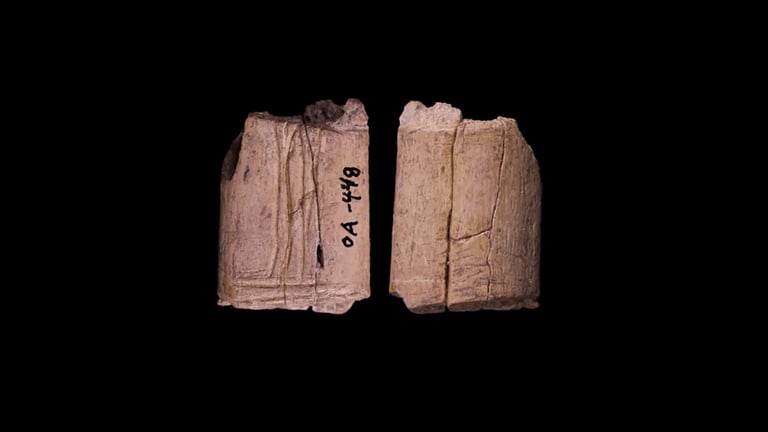

Indigenous gambling was typically a one-to-one social exchange rather than house-backed, often involving trade goods and tending toward 50/50 outcomes over time.
Most documented dice games involved women as participants, signaling a social technology for building connections and integrating strangers.
A new study published in American Antiquity argues that Native American hunter-gatherers created and used dice more than 12,000 years ago, predating Old World dice by thousands of years.
The full article, titled Probability in the Pleistocene: Origins and Antiquity of Native American Dice, Games of Chance, and Gambling, will appear in American Antiquity, published by Cambridge University Press for the Society for American Archaeology.
If confirmed, these North American dice would be older than the previously known dice from Asia and the Middle East, suggesting early mathematical thinking and use of probability.
Culin’s descriptions of binary lots inspired Madden to seek artifact evidence of dice that function like coin flips and can yield complex outcomes when multiple dice are used.
Robert J. Madden, a Colorado State University Ph.D. student, emphasizes that while the findings do not constitute formal probability theory, they show intentional use of random outcomes in rule-based play and contribute to probabilistic thinking in human history.
Archaeologist Robert Madden examined the oldest candidates in person, confirming they are bone dice with worn surfaces and etched markings, some showing faint red pigment differences between sides.
Madden developed four diagnostic features to classify artifacts as dice: two-sided composition, distinct markings on each side, flat or slightly curved surfaces, and a size suitable for holding and throwing multiple pieces.
Madden systematically reviewed Native American artifacts to identify potential dice using criteria such as being two-sided, hand-sized, marked, and lacking holes.
Independent experts, including Weiner of Dartmouth College, support the interpretation that the objects are dice and reflect a long-running Native American dice tradition.
Other experts not involved in the study generally concur that these artifacts are dice and not misidentified objects.
Summary based on 5 sources
Get a daily email with more Science stories
Sources
ScienceDaily • Apr 2, 2026
Ancient bone dice reveal 12,000-year history of gambling in America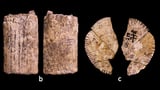
ScienceAlert • Apr 2, 2026
Scientists May Have Uncovered The World's Oldest Dice