Revolutionary DNA Tech: Programmable Cellular Agents Transform Genetic Blueprinting
April 2, 2026

DNA is reframed from a static genetic blueprint to an active, non-genetic agent that operates inside living cells, via a Retro-based system that synthesizes DNA from RNA and remains autonomous from the host genome, enabling programmable actions as a cellular field agent.
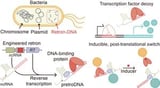
The work demonstrates how DNA can act as a programmable tool inside cells, using a bacterial retron system to generate stable, DNA fragments that interact with proteins without altering genomic DNA.
The study, Construction of synthetic protein-binding non-genetic DNA systems in living cells, appears in Nature Chemistry and was published in mid-January 2026, supported by Korean science and education programs and institutions.
This Nature Chemistry publication reflects a multidisciplinary effort across synthetic biology, molecular genetics, and bioengineering, backed by government and institutional programs.
Researchers engineer retron-based DNA inside cells to be stable and operable, allowing DNA to function as an active component within the cellular environment rather than solely as a blueprint.
Engineered retron-based DNA fragments can bind specific proteins and modulate cellular behavior without altering core genomic DNA, enabling controlled gene expression, protein localization, and recording of transient molecular events.
Potential implications include autonomous smart biotherapeutics that sense disease markers and adjust treatment, enhanced environmental biosensing and bioreporting, and broad impacts across medicine, environmental science, and energy sectors.
POSTECH researchers led by Professor Jongmin Kim and Ph.D. candidate Geonhu Lee repurposed the bacterial retron system to generate stable, programmable DNA fragments inside living cells via reverse transcription of RNA.
Three core applications are demonstrated: (1) using DNA as bait to recruit proteins and regulate gene expression, (2) directing real-time protein relocalization in response to intracellular signals, and (3) semi-permanently recording transient molecular events after brief inputs.
The platform lays groundwork for smart biotherapeutics with autonomous regulation, real-time sensing of disease markers such as cancer or inflammation, and environmental sensing for pollutants like microplastics or heavy metals.
The team shows DNA fragments acting as cargo to influence transcription factor availability, sensors that trigger immediate protein localization changes, and high-temporal-resolution recording of transient molecular events in live cells.
Summary based on 3 sources
Get a daily email with more Science stories
Sources
EurekAlert! • Apr 1, 2026
DNA steps out of the "blueprint" role to become an active "field agent"
BIOENGINEER.ORG • Apr 2, 2026
DNA Transforms from Blueprint to Active Field Agent
Mirage News • Apr 2, 2026
DNA Shifts From Blueprint to Active Field Agent