Astronomers Discover Most Chemically Pristine Star, SDSS J0715-7334, Offering Glimpse into Universe's Dawn
April 7, 2026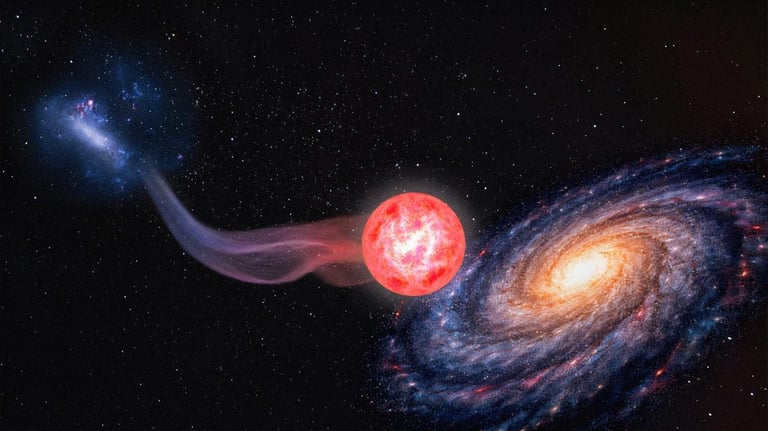

The star represents the most chemically pristine known, offering a window into early star and galaxy formation.
Its orbital dynamics suggest it originated in or near the Large Magellanic Cloud before migrating into the Milky Way.
Its iron and carbon abundances are far lower than typical extreme stars, providing a close look at the universe’s dawn.
A group of astronomers reports the discovery of the most chemically pristine star yet observed, SDSS J0715-7334, likely among the oldest stars formed in the first few billion years after the Big Bang.
An international team led by University of Chicago's Alexander Ji and Carnegie astrophysicist Juna Kollmeier identified SDSS J0715-7334 as the most pristine star known, using SDSS-V data and Magellan telescope observations in Chile, with findings published in Nature Astronomy.
Data were gathered at Las Campanas Observatory and analyzed from SDSS-V, followed by Magellan telescope observations, with the results published in Nature Astronomy.
The discovery leveraged SDSS-V's wide-sky spectroscopic survey and high-resolution spectra from the Magellan Clay telescope, underscoring the role of Las Campanas Observatory and mentorship from University of Chicago students.
The finding is published in Nature Astronomy, with lead author Ji describing pristine stars as windows into the dawn of stars and galaxies and highlighting how later generations formed from metals produced by earlier stars.
Gaia data indicate SDSS J0715-7334 formed outside the Milky Way and was later accreted, placing it about 80,000 light-years from Earth.
SDSS J0715-7334 is a red giant star with extremely low metallicity, formed from gas polluted by only a single prior supernova.
The star is extremely metal-poor, containing less than 0.005% of the Sun’s metal content, and is about 40 times more metal-poor than the previous record-holder, with very low iron and carbon.
The study underscores the value of surveying for rare, low-metallicity stars to test theories of star formation and stellar explosions across cosmic time.
Summary based on 3 sources
Get a daily email with more Science stories
Sources
Gizmodo • Apr 7, 2026
Astronomers Found the Closest Thing Yet to the Universe’s First Stars
Home • Apr 3, 2026
Found: Most pristine star in the universe
ZME Science • Apr 7, 2026
Astronomers Find the “Most Pristine” Star Yet