Seabirds Reveal Global Mercury Hotspots: A Warning for Ocean Health and Human Risk
April 13, 2026

Mercury, including methylmercury, builds up through the food web, and seabirds act as an early warning signal for broader ecosystem health, not just the birds themselves.
Seabirds serve as global indicators of mercury contamination in oceans, reflecting the health of marine food chains and potential risks to humans via seafood.
Breeding-site blood sampling offers a reliable, minimally invasive measure of recent dietary mercury intake, allowing time- and location-specific correlations superior to other sample types.
Global patterns show hotter mercury zones in the North Atlantic, North Pacific, and parts of the South Pacific, with cooler zones in the South Atlantic and Southern Ocean, linked to regional productivity.
Hotspots of mercury contamination were identified in the North Atlantic, North Pacific, and parts of the South Pacific, with persistence tied to areas of lower biological productivity.
Regional data indicate higher mercury concentrations in the North Atlantic, North Pacific, and parts of the South Pacific south of 40°S, while the South Atlantic and Southern Ocean show lower levels.
An international study analyzed blood samples from over 11,000 seabirds across more than 100 species, providing the first biologically based global estimate of mercury distribution in marine ecosystems.
The research compiled 659 newly collected samples plus over 10,000 data points from prior work, focusing on seabird breeding sites to reflect dietary intake in the previous two months.
A systematic review of 106 publications spanning 1980–2025 supported a global synthesis across 105 seabird species and more than 10,556 adults.
Published in Science of the Total Environment, the study calls for integrating biological monitoring with traditional models to better understand global mercury risk in oceans.
Findings support aligning environmental and health surveillance with the Minamata Convention and emphasize public awareness on safe fish consumption for vulnerable groups.
There is a weak correlation between seabird-based data and existing marine mercury distribution models, suggesting current estimates may underestimate real exposure.
Summary based on 3 sources
Get a daily email with more Science stories
Sources

Outlook India • Apr 13, 2026
Global Study Using Seabirds Highlights Hidden Exposure Risks In Marine Food Chain | Outlook India
Earth.com • Apr 13, 2026
Seabirds reveal hidden mercury pollution across the world’s oceans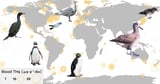
Ocean News & Technology • Apr 13, 2026
Seabirds Reveal Global Mercury Distribution in Oceans - environment coastal & offshore