AI and 3D Imaging Revolutionize Coral Disease Detection and Reef Health Monitoring
April 14, 2026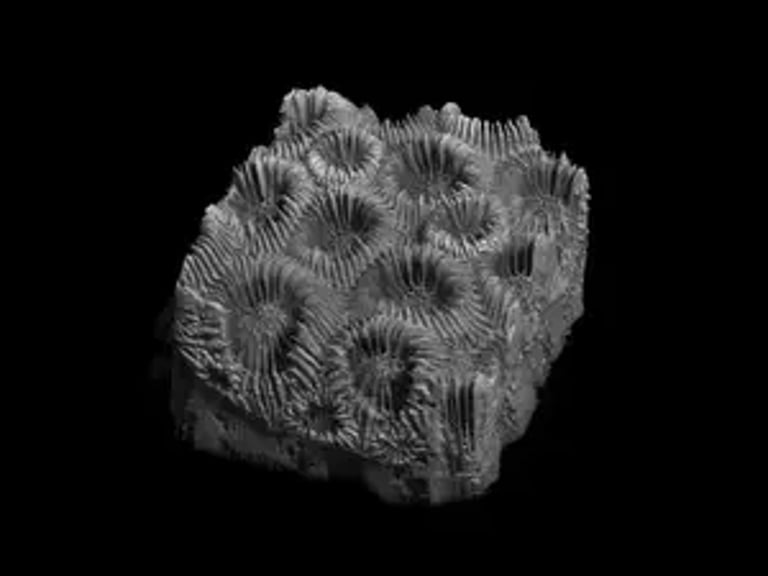


Florida Atlantic University researchers used X-ray micro-CT to obtain high-resolution 3D images of coral skeletons, enabling non-destructive analysis of porosity, density, and thickness.
They combined micro-CT imaging with deep learning to study skeletal changes in corals affected by Stony Coral Tissue Loss Disease (SCTLD) off Florida’s coast.
The approach leverages 3D imaging to quantify porosity, density, and thickness, providing a detailed view of skeletal structure.
Attention U‑Net completed full image segmentation in seven hours, faster than U‑Net (15 hours) and U‑Net++ (17 hours), demonstrating efficiency for large high‑resolution datasets.
A performance comparison showed Attention U‑Net’s superior speed on large datasets, illustrating its suitability for reef imaging work.
The imaging‑AI pipeline offers potential for early disease detection, as skeletal changes can precede visible tissue loss, and it provides a scalable framework for monitoring reef health under climate change and pollution.
Three CNN models (U‑Net, U‑Net++, Attention U‑Net) were evaluated across four datasets to detect subtle skeletal changes caused by SCTLD.
Findings are published in the Journal of Structural Biology, with support from the National Science Foundation and FAU seed funding through the College of Engineering and I‑SENSE Institute.
The study analyzed healthy and SCTLD‑affected specimens of Montastraea cavernosa and Porites astreoides to build a robust dataset for model evaluation.
Deep learning algorithms achieved about 98% accuracy in distinguishing diseased from healthy coral samples, enabling rapid automated analysis of 3D imaging data.
3D maps revealed disease‑related changes in porosity and skeletal structure, with healthy versus SCTLD‑affected corals showing clear differences and species‑specific vulnerability.
The work demonstrates the potential of combining micro‑CT with deep learning to quantify microscopic skeletal changes, informing reef protection and restoration strategies.
Summary based on 3 sources
Get a daily email with more Science stories
Sources
EurekAlert! • Apr 14, 2026
Study reveals hidden damage in stony corals using 3D imaging and AI
Newswise • Apr 14, 2026
Study Reveals Hidden Damage in Stony Corals Using 3D Imaging and AI | Newswise
BIOENGINEER.ORG • Apr 14, 2026
3D Imaging and AI Uncover Hidden Damage in Stony Corals, New Study Finds