Groundbreaking Atlas Maps Human Liver Gene Expression, Reveals Unique Zonation Patterns and Disease Insights
April 15, 2026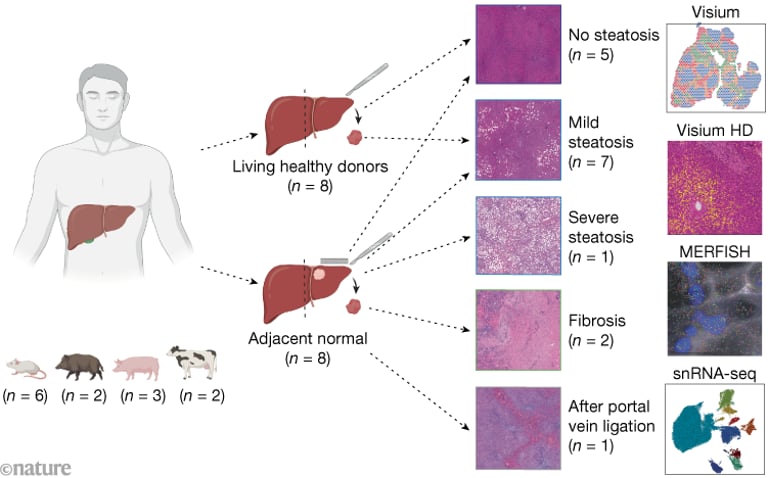

The atlas demonstrates potential for tracing disease development and guiding targeted therapies, and suggests the approach could map other organs at single-cell resolution to transform human biology understanding.
A high-resolution atlas reveals human-specific patterns of gene expression across different zones in the liver lobule, underscoring unique zonation in humans.
Researchers integrated multiple spatial omics technologies—10X Visium, MERFISH, snRNA-seq, and PhenoCycler imaging—to map zonation across hepatocytes and non-parenchymal cells, validating findings with cross-method concordance and a web app for exploration.
Pericentral hepatocytes are enriched for xenobiotic metabolism, bile acid synthesis, lipid biosynthesis, and WNT pathway components, while periportal hepatocytes show immune-related gene enrichment and gluconeogenesis, with human-specific patterns like pericentral PCK2 and GLUT2.
Healthy donor livers from altruistic living donation provided eight samples for analysis, with comparative data from mice and larger mammals to contextualize human zonation.
Kupffer cells relocate to and prominently populate the lobule center in humans, suggesting an evolved immune turnover mechanism to cope with higher cellular attrition there.
Early steatosis (MASLD) begins with lipid accumulation predominantly in the pericentral zone, and machine learning quantifies lipid content per spot to link zonation to disease initiation in healthy livers, offering a resource to study progression.
Context notes cover data licensing and access options for Nature, with references to related liver biology literature and single-cell mapping resources.
The study identifies spatially resolved adaptations in liver cells from individuals with steatosis, highlighting zone-specific changes.
Liver histology from living donors shows clear transcriptional differences from adjacent normal tissue, reinforcing the need for truly healthy tissue as a reference for atlas construction.
A collaboration among Weizmann Institute, Sheba Medical Center, and Mayo Clinic yields the first genetic atlas of a healthy human liver at 2-micron resolution, revealing a more complex regional organization than previously thought.
The work enhances understanding of liver architecture and zonation, with implications for liver diseases and personalized medicine.
Summary based on 3 sources
Get a daily email with more Science stories
Sources
Nature • Apr 15, 2026
A spatial atlas of the healthy human liver from live donors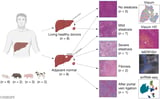
Nature • Apr 15, 2026
A picture of health: gene-expression maps of the human liver from living donors
Mirage News • Apr 15, 2026
Journey To Center Of Liver