Remembering Prof. Michael Rabin: Pioneering Computer Scientist and Turing Award Laureate Dies at 94
April 18, 2026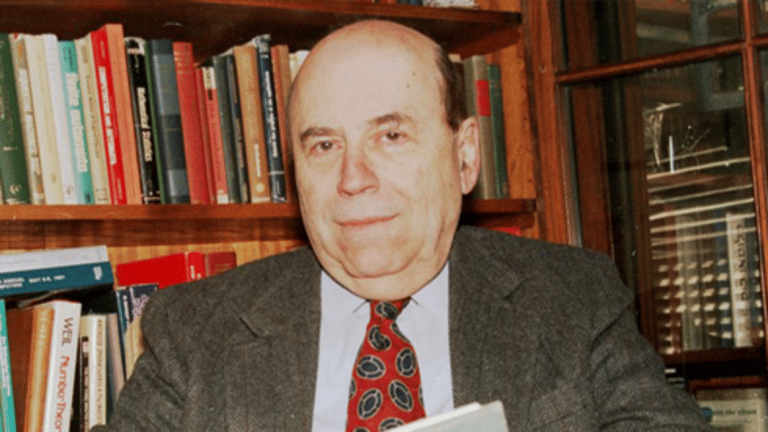


A detailed obituary notes the passing of Prof. Michael Rabin at age 94, highlighting his status as a pioneering Israeli computer scientist and the Turing Award laureate whose work laid foundations in algorithms, cryptography, and artificial intelligence.
Rabin, who shared the 1976 ACM Turing Award with Dana Scott, was renowned for co-developing core ideas in automata theory, randomized algorithms, and cryptography, cementing his place in the history of computing.
His academic journey began with studies in set theory and mathematical logic, and he interacted with towering figures like Fraenkel, Church, and Turing while pursuing doctoral work at Princeton and collaborating with Dana Scott.
Rabin contributed foundational results on nondeterministic finite automata, establishing that regular languages can be recognized by nondeterministic machines and influencing later computational complexity and automata theory.
In later years, he explored zero-knowledge proofs and cryptography and contemplated how machine learning might redefine human roles in medicine and society.
His career spanned top universities and research hubs, including Hebrew University, Harvard, MIT, UC Berkeley, and Columbia, where he directed research in logic and the foundations of computer science.
At Hebrew University, he helped found the computer science department in 1970, served as rector, balanced campus duties with roles at IBM and Harvard, and mentored generations of scientists.
Rabin’s work encompassed probabilistic automata, the polynomial-time framework, and decidability results for infinite-tree automata, shaping formal language theory and logic.
Among his landmark scholarly contributions is the 1959 deterministic versus nondeterministic finite automata paper with Dana Scott, along with advances in probabilistic algorithms, distributed computing, and notable results like the Miller–Rabin primality test and the Byzantine generals problem.
Born in Breslau in 1931, he emigrated to pre-state Israel, grew up in Haifa, and pursued advanced studies at Hebrew University under Fraenkel.
Rabin was celebrated as an exceptional teacher and mentor; his legacy includes his daughters Tal Rabin and Sharon Rabin-Margaliot in academia, and he rests in Ra’anana beside his wife Ruth.
His career bridged mathematics and computer science, driving computing from theory toward its central role in modern life and shaping both Israeli and global computer science communities.
Summary based on 2 sources
Get a daily email with more Tech stories
Sources
ynetglobal • Apr 18, 2026
Farewell to Prof. Michael Rabin, godfather of Israeli computer science