Breakthrough in 3D Printing: Researchers Fabricate Nano-Structures Inside Living Cells
April 20, 2026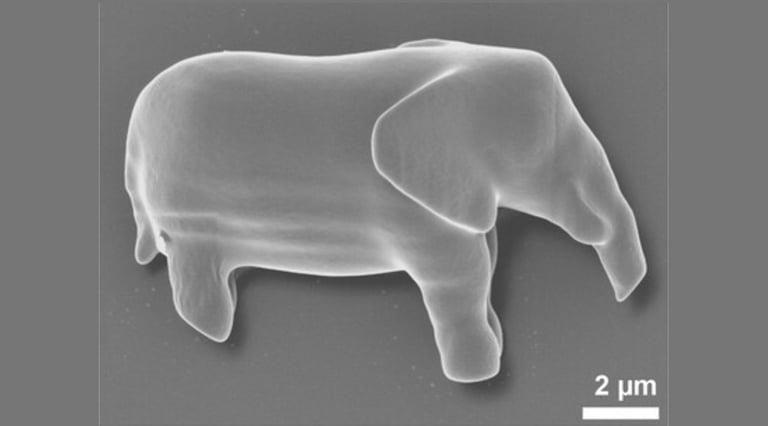

Researchers achieved the first successful 3D printing of objects inside living human cells using two-photon polymerization, enabling in-situ fabrication of nano- to micron-scale structures within cells.
This approach uses a non-toxic, water-dissolving resin, avoiding the cell-damaging issues of earlier methods that relied on microinjection or cellular uptake.
Barcode printing creates an enormous combinatorial space—a 4x4 grid yields more than a quintillion configurations—allowing unique cellular tagging and tracking beyond population averages.
Potential applications include intracellular devices and sensors such as levers, springs, barriers, or responsive microdevices, as well as intracellular microrobots, with ongoing work to optimize resin to minimize cellular damage and expand safe printing inside cells.
The printed objects were well-tolerated by cells, with time-lapse imaging showing normal behavior and inheritance of the prints to daughter cells during division.
The study represents a step toward intracellular bioengineering tools that could open new ways to study and manipulate cellular behavior from within the cell environment.
Notably, a 10-micron elephant figurine, a barcode tag, and a functional microlaser were printed inside a single living cell, with printing completed in under 10 seconds and most resin dissolving within about two hours.
Summary based on 1 source
Get a daily email with more Science stories
Source
Advanced Science News • Apr 20, 2026
3D printing is now possible inside living cells