Scorpion Stingers and Pincers Enhanced by Metal Infusion: New Study Reveals Evolutionary Trade-offs
April 28, 2026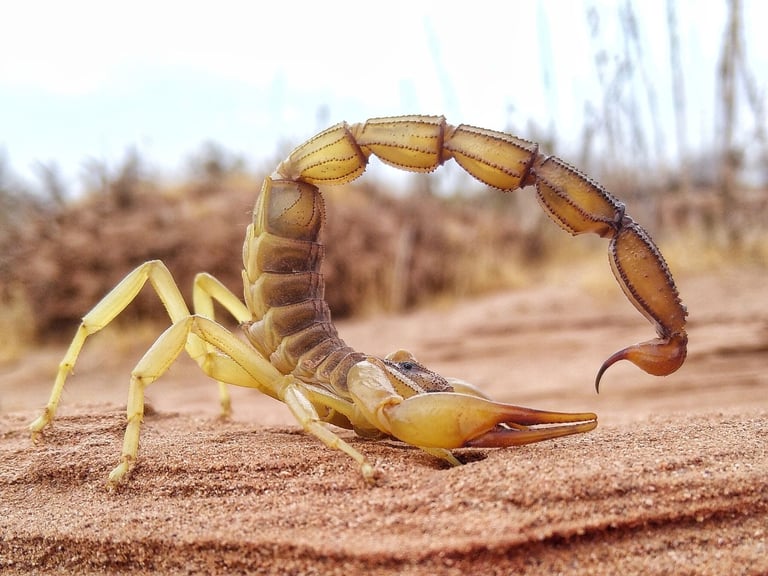

On April 28, 2026, the study’s publication established a methodological blueprint for studying metal enrichment across life’s diversity and how biology engineers microscopic weapons.
Experts say understanding scorpion biology and metal-based weaponry sheds light on their evolutionary success and could reduce fear by highlighting their ecological significance.
The study carefully accounted for evolutionary lineage to ensure patterns are not simply due to relatedness, strengthening conclusions about metal distribution across diverse scorpion families.
This is the first statistical analysis of metal uptake in scorpions that accounts for phylogenetic relationships, suggesting metal enrichment is widespread across roughly 3,000 species.
Lead author Sam Campbell notes that metal enrichment has diversified as scorpions evolved changes in how they use claws and stingers.
The research used advanced microanalytic techniques, including electron microscopy and X-ray analysis, to locate metal deposition within the weapons.
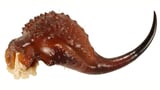
Iron was found more in long, slender pincers than in thick crushing ones, implying iron adds structural integrity to hold prey for venom action, linking hunting behavior to metal composition.
Unexpectedly, species with stronger crushing pincers tended to have less zinc, suggesting zinc enhances wear resistance and hardness where leverage is weaker, while another point links zinc with longer, thinner claws used for venom delivery.
Scientists found that metals such as zinc, manganese, and iron are added to scorpion stingers and pincers to strengthen and sharpen them, based on an analysis of 18 scorpion species.
There is an evolutionary trade-off: species with more zinc in their tails or pincers tend to have less in the other, indicating different species optimize different weapon components.
Researchers argue metal enrichment patterns reflect each species’ hunting strategy—whether they rely on powerful claws or venomous stings—and may reveal broader arthropod evolutionary trends.
Findings were published in the Journal of the Royal Society Interface, with the article reporting on its publication date.
Summary based on 4 sources
Get a daily email with more Science stories
Sources
Gizmodo • Apr 28, 2026
Scorpions Are Literally Metal, Study Reveals
Interesting Engineering • Apr 28, 2026
Scorpions turn into metalsmiths to reinforce stingers for extra strength, study shows
Smithsonian Magazine • Apr 28, 2026
Scorpions Are So Metal—Literally. New Images Reveal Patterns in How Their Weaponry Is Fortified With Iron, Zinc and Manganese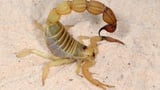
Popular Science • Apr 28, 2026
Metal-reinforced scorpions evolved to kill