UI Spaceflight Labs Propel Innovation in Space Hardware and Student Training
May 1, 2026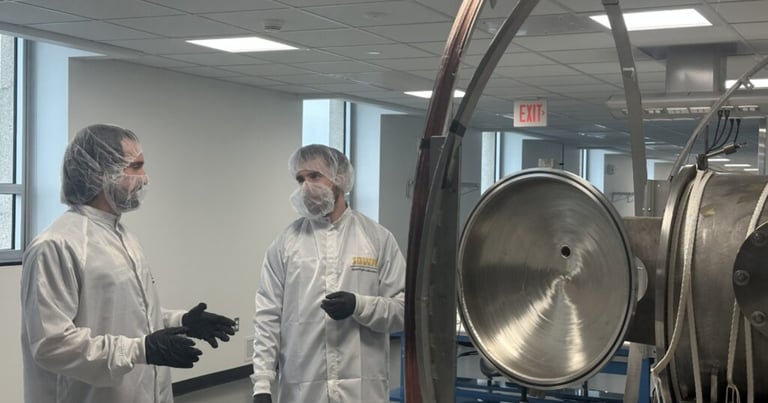

The spaceflight laboratories function as service centers, welcoming internal UI projects as well as external academia and industry collaborations to expand partnerships and provide hands-on student training.
These labs are designed to attract external partnerships, industry collaborations, and grant opportunities, enabling UI to move space hardware from concept through delivery.
Professor Greg Howes, head of the UI Physics and Astronomy Department, advocates a sustainable, integrated approach to designing and building space instrumentation for exploration.
A third TRACER spacecraft sits in the lab’s prototyping space and is not designated for launch, with the UI repurposing James Van Allen’s former workspace into clean rooms for humidity- and temperature-controlled instrument assembly.
The onsite TRACERS program includes a third spacecraft kept on-site for prototyping, while preserving a space-oriented area used previously by James Van Allen.
UI has a long history of space collaboration dating back to the 1950s, contributing to missions like Explorer 1 and instruments on Cassini, Juno, and Voyager I, and continues to lead or participate in NASA missions and multi-institution projects.
The new laboratory at UI is intended to accelerate leadership in space science by supporting the full lifecycle of instrument development—from design to testing to integration.
Graduate students and faculty are actively involved, with students building instruments to collect data above TRACERS’ orbit and plans for hundreds of in-house produced circuit boards.
Funding for renovations and equipment totaled $7.2 million from the UI and $670,000 from the Roy J. Carver Charitable Trust, with additional NASA support.
The facility aims to serve as a one-stop shop for space hardware, supported by UI funding, the Carver Trust, and NASA, enabling end-to-end development from concept to delivery.
While focused on robotic, non-manned missions, UI research also informs manned missions by studying space weather and conditions that affect astronaut safety, aiding Artemis and related initiatives.
The spaceflight labs enable rapid iteration, as seen when new brackets were designed in weeks during TRACERS preparation, and they support quick responses to testing issues.
Summary based on 4 sources
Get a daily email with more Science stories
Sources
Iowa Capital Dispatch • May 1, 2026
University of Iowa propels space science forward with opening of spaceflight lab
Radio Iowa • Apr 29, 2026
New UI lab is devoted to exploring the distant reaches of space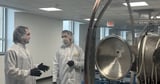
News From The States • May 1, 2026
University of Iowa propels space science forward with opening of spaceflight lab | News From The States