Astronomers Discover 27 Potential Planets Orbiting Binary Stars Using Novel Timing Method
May 4, 2026

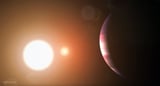
Astronomers have identified 27 candidate circumbinary planets—worlds that orbit two stars—using a novel timing-based method, expanding the known sample of planets in binary-star systems.
The candidate planets, ranging from Neptune-like to up to about ten Jupiter masses, are located between roughly 650 and 18,000 light-years away and would occupy a broad span of sizes.
The team analyzed data from 1,590 binary systems observed by NASA's TESS, employing eclipse timing variations and apsidal precession to infer planetary-mass objects without direct transits.
Future ground-based spectroscopic observations will be needed to measure stellar velocities and confirm the gravitational influence of the planets.
The findings were published in the May issue of Monthly Notices of the Royal Astronomical Society, with lead author Margo Thornton and co-author Benjamin Montet highlighting implications for planet formation in binary environments.
Coinciding with Star Wars Day, the study echoes popular fiction by suggesting two-star planetary systems, and suggests refinements to timing-based techniques could reveal more such worlds.
Circumbinary planets face extreme environments, but there may be a stable region in the dual-star system where such planets could reside, making Tatooine-like worlds plausible.
The work builds on context about the rarity of circumbinary planets in prior surveys and links to previous research suggesting binary dynamics can hinder planet formation.
NASA researchers emphasize TESS's ongoing value beyond exoplanets, inviting public participation in citizen science projects like Planet Hunters TESS to analyze light curves for new candidates.
While these are strong planet candidates, additional spectroscopic analysis is required to determine exact masses and confirm whether they are planets, brown dwarfs, or low-mass stars.
Further analysis of light curves and supplementary observations are needed to rule out false positives and verify planetary status.
Spectroscopy will be essential to distinguish planets from brown dwarfs or small stars and to nail down the true nature of the candidates.
Summary based on 5 sources
Get a daily email with more Science stories
Sources
NASA Science • May 4, 2026
For NASA’s TESS, Stellar Eclipses Shed Light on Possible New Worlds - NASA Science
The Guardian • May 4, 2026
Scientists discover 27 potential new planets that orbit two stars in solar systems far, far away
Slashdot • May 4, 2026
Scientists Discover 27 Potential New Planets That Orbit Two Stars - Slashdot
Smithsonian Magazine • May 4, 2026
Astronomers Discover 27 Potential Planets Each Orbiting Two Stars, Just Like the Fictional Tatooine in 'Star Wars'