NASA Races Against Time to Save Swift Observatory from Decaying Orbit with High-Stakes Mission
May 8, 2026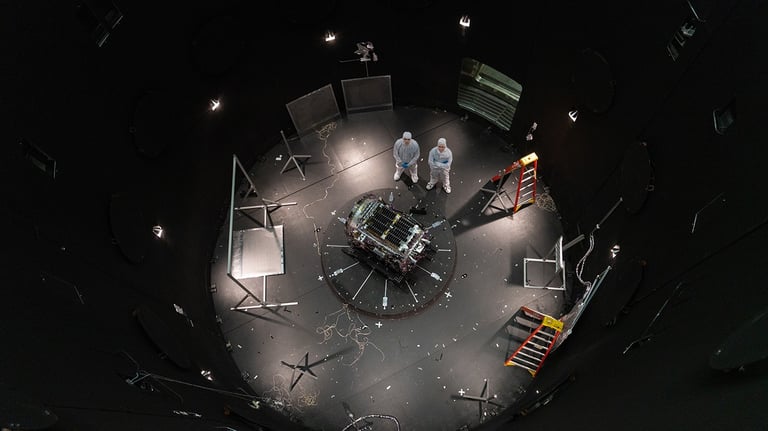

The mission aims to reboost NASA’s Neil Gehrels Swift Observatory, whose orbit is decaying due to atmospheric drag, with reentry now expected as late 2026 and a potential earlier window depending on drag conditions.
The project is high-risk and time‑sensitive, contracted by NASA in September 2025, with a tight schedule to design, build, test, rendezvous, and lift Swift amid intensified solar activity increasing drag.
To buy time, Swift’s team has reconfigured the spacecraft with shut-downs and reorientation efforts to minimize drag while assessing whether the Link boost can fit the updated timeline.
Northrop Grumman will integrate the Link with a Pegasus XL rocket at Wallops Flight Facility in early June, with deployment from a carrier aircraft over the Marshall Islands later in June.
The June launch plan envisions Link- Pegasus integration in Virginia followed by aircraft deployment from the Marshall Islands later that month.
The report framing comes from Aerospace Daily & Defense Report, part of Aviation Week Intelligence Network.
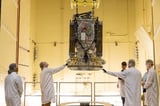
Engineers simulated launch vibrations and conducted thermal vacuum testing in a Space Environment Simulator, including xenon ion thruster operation and robotic arm deployment.
LINK is presented as a hardware milestone to extend Swift’s operational life and capabilities through on‑orbit servicing.
Link has completed environmental testing at NASA Goddard and is in final prelaunch preparations in Colorado before shipping to Wallops in early June for Pegasus XL integration.
Katalyst Space Technologies completed environmental testing of the LINK spacecraft, built to service Swift.
LINK, built by Katalyst Space Technologies, returned from Goddard to Colorado for checks after Space Environment Simulator tests concluded in early May.
The LINK mission is supported by NASA’s Astrophysics Division as a cost‑effective alternative to replacing Swift, leveraging existing commercial technologies.
Summary based on 4 sources
Get a daily email with more Science stories
Sources
NASA Science • May 8, 2026
Katalyst Wraps Testing at NASA Goddard for Swift Boost Mission - NASA Science
SpaceNews • May 8, 2026
Swift reboost mission completes environmental tests
Aviation Week Network • May 8, 2026
Katalyst Readies LINK For NASA Space Telescope Servicing Boost