New Study Reveals Hierarchical Mergers as Key to Massive Black Hole Growth Beyond 45 Solar Masses
May 10, 2026

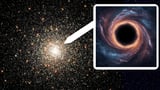
Globular clusters, with their high stellar densities, are highlighted as likely factories for heavy stellar-mass black holes through frequent mergers and re-accumulation of mass.
The high-mass population exhibits spins that appear randomly oriented, consistent with multiple mergers in dense clusters and supporting the cluster-origin scenario for the heaviest black holes.
If these results hold, they imply cluster dynamics are a key driver of black hole growth and offer insights into how massive stars end their lives in dense stellar environments.
Looking ahead, improved detector sensitivity and larger catalogs could reveal finer subpopulations and clearer formation channels, further clarifying black-hole growth over time.
While the intermediate-mass explanation gains traction, the origin of supermassive black holes in galactic centers remains unresolved and alternative theories are still explored.
A boundary near 45 solar masses, the pair-instability mass gap, separates the two black-hole populations; observational data from 153 LIGO–Virgo–KAGRA detections show heavier black holes likely arise from hierarchical mergers in clusters rather than direct stellar collapse.
Analyses of the GWTC4 catalog reveal two distinct populations: lower-mass black holes from stellar collapse and higher-mass, rapidly spinning black holes that point to hierarchical mergers in dense environments.
These findings provide empirical support for hierarchical mergers as a credible mechanism to form black holes above the 45-solar-mass gap and help explain black-hole growth across cosmic history.
Leading the work is Fabio Antonini of Cardiff University with co-author Isobel Romero-Shaw, and the results were published in Nature Astronomy on May 7.
Massive black holes may form through repeated mergers in globular clusters rather than solely from direct collapse of massive stars.
Summary based on 2 sources