Newly Discovered Dinosaur Nagatitan is Southeast Asia's Largest Sauropod
May 14, 2026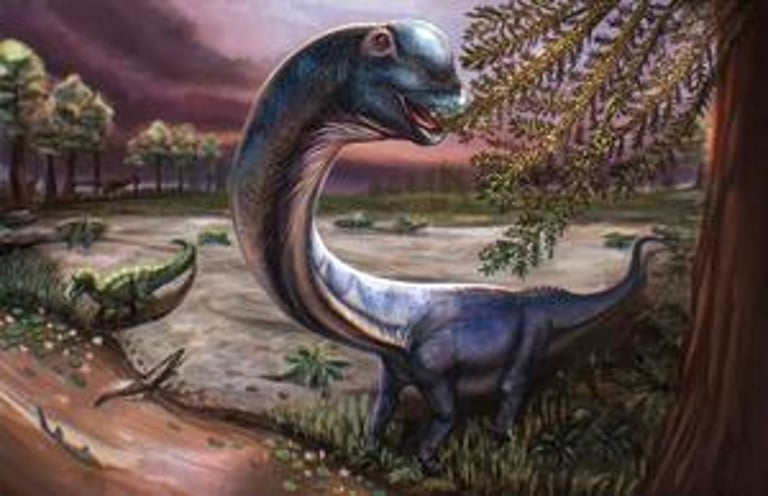


A newly identified long-necked sauropod from northeastern Thailand, Nagatitan chaiyaphumensis, is the largest dinosaur discovered in Southeast Asia to date.
Nagatitan’s name honors Naga, with researchers speculating it could be Southeast Asia’s last "titan" due to shifting geography potentially limiting future sauropod presence.
Classification places Nagatitan in the Euhelopodidae subgroup Somphospondyli and places it in the Early Cretaceous, roughly 100 to 120 million years ago, in an arid to semi-arid riverine landscape.
The study notes that sauropod gigantism evolved independently across regions, driven by climate, habitat structure, and herbivore biology.
Independent experts not directly involved in the project, such as Mathew Wedel, regard the find as a robust dataset that advances understanding of giant dinosaurs and regional paleoenvironments.
The study, led by Thitiwoot Sethapanichsakul of University College London and published in Scientific Reports on May 14, 2026, includes co-author Paul Upchurch.
Fossils were first discovered in 2016, with excavations from 2016–2019 and a 2024 restart after renewed funding.
Experts highlight the find’s significance for understanding sauropod size evolution and earlier growth trends toward later giant forms.
Fully grown Nagatitan likely faced little predation, with threats focused on old, sick, or juvenile individuals, suggesting rapid growth as a defensive strategy.
The discovery occurs during a period of rising CO2 and higher global temperatures, factors scientists link to sauropod biology, heat management, and vegetation.
The ecosystem was subtropical, with forests, savannas, and shrublands, supporting diverse dinosaurs, pterosaurs, crocodiles, and freshwater sharks, and a large Carcharodontosaurus-related predator.
Researchers estimate Nagatitan was a bulk browser with a long neck and tail, small head, and four-columnar legs, feeding on high vegetation such as conifers and possibly seed ferns.
Summary based on 11 sources
Get a daily email with more World News stories
Sources
New York Post • May 14, 2026
Scientists discover Southeast Asia's largest dinosaur in Thailand
Yahoo News • May 14, 2026
Scientists dig up Southeast Asia's largest dinosaur in Thailand
Reuters • May 14, 2026
Scientists dig up Southeast Asia's largest dinosaur in Thailand
BBC News • May 14, 2026
Giant new dinosaur identified from remains found in Thailand