Colossal Biosciences' Moa Revival: Artificial Egg Technology Sparks Skepticism Despite Engineering Feats
May 19, 2026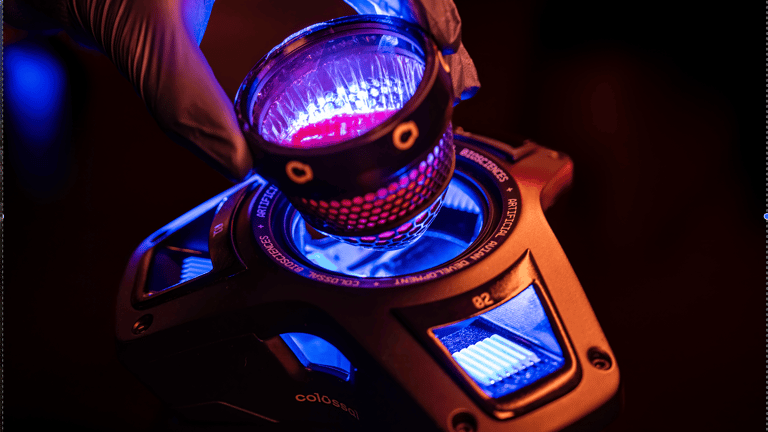


Colossal Biosciences is pursuing a moa revival via a reengineered incubation platform, using artificial eggshells to support chick development, but experts caution this is not a true resurrection and significant genetic and ecological hurdles remain.
The project envisions scaling to larger species and potentially moa-sized eggs, yet the colossal size of a moa egg presents a major challenge, requiring a suitable surrogate or an oversized artificial egg during development.
Independent scientists acknowledge the achievement as impressive in engineering terms, but say current results do not constitute a genuine artificial egg and remain skeptical about reviving extinct moas due to gaps in oxygen balance, nutrient supply, and waste removal.
Coverage of the breakthrough has spread across major outlets, with New York Post reporting chick hatchings and ongoing monitoring, and other networks weighing in on its implications.
Initial demonstrations used chicken embryos to validate the system, with monitoring through a top-access portal and a visible signal when the chick was ready to hatch.
The artificial egg uses a 3D-printed titanium shell with a bio-engineered silicone membrane to enable full incubation and hatch without a real shell, featuring a porous outer shell and ultra-thin inner membranes for gas exchange.
The design combines a titanium outer shell with hundreds of pores and a delicate silicon inner membrane to mimic natural incubation while allowing precise environmental control.
CNN provided video coverage of the report, but the release lacks detailed methodological data or peer-reviewed results in the excerpt.
Historically, early artificial-egg hatching milestones date back to 1998 with quail embryos, followed by use of simple monitoring methods as researchers seek scalable outcomes for de-extinction efforts.
A May press release and accompanying video describe the artificial egg, though no peer-reviewed paper or independent verification accompanies the announcement.
Details on construction, the exact hatch counts, and independent validation are not provided, reinforcing that the claim rests on a single company statement.
Colossal’s approach redefines incubation system design from first principles, aiming for a scalable, controllable platform that could extend beyond avian reproduction into broader biotech applications.
Summary based on 13 sources
Get a daily email with more Startups stories
Sources

AP News • May 19, 2026
Colossal Biosciences says it has hatched chicks in an artificial environment | AP News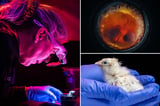
CNN • May 19, 2026
Biotech company hatches chicks from artificial eggs | CNN