MouseMapper Unveiled: Revolutionizing Obesity Research with AI-Driven Whole-Body Mapping
May 20, 2026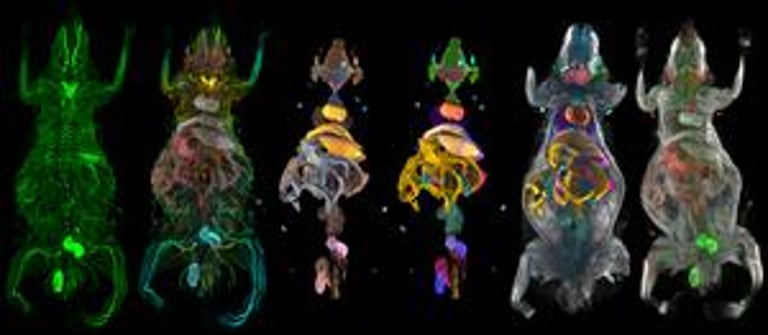


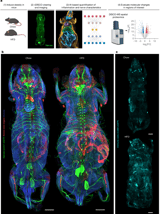
MouseMapper is a foundation-model-based deep-learning platform that maps obesity-induced cellular changes across the entire mouse body, automatically segmenting 31 organs and mapping nerves and immune cells at cellular resolution.
The framework enables quantitative analysis of peripheral nerve networks, segmentation of Cd68-eGFP+ immune cells, and mapping of structures to 31 organs across the whole body with strong generalizability across imaging resolutions and labeling strategies.
A multidisciplinary team from Helmholtz Munich, LMU Munich and collaborators unveiled MouseMapper in a study published in Nature, highlighting its AI-driven whole-body mapping capabilities.
The researchers generated and publicly released whole-body datasets to enable global exploration of obesity-related changes by the scientific community.
These datasets are publicly available online, allowing researchers worldwide to examine obesity-associated multi-organ changes.
The work emphasizes a shift from reductionist organ-focused studies to holistic, whole-body analyses to understand disease dynamics and identify new therapeutic targets.
Lead investigator envision future development into digital twins of organisms for in silico disease modeling and drug testing at cellular resolution to advance personalized medicine.
Spatial proteomics of the trigeminal ganglia revealed differential regulation of 230 proteins with pathways linked to actin cytoskeleton, RHO GTPase effectors, axon guidance, inflammation and immune signaling; downregulated SERPIN-A family members may relate to inflammation and tissue damage.
Immune-Module achieved higher segmentation accuracy (voxel Dice around 0.788) than leading methods, showing robustness to signal heterogeneity and generalizing to tissues not in training, like liver and gut.
Spatial proteomics of the trigeminal ganglion showed nerve remodeling and local inflammation, with parallel molecular changes in human trigeminal tissue from individuals with obesity, suggesting conserved obesity-related neural pathologies.
In obesity models, MouseMapper revealed widespread immune-cell clustering alterations and significant reorganization of the trigeminal nerve, including reduced branching and endings linked to diminished sensory responses in behavioral tests.
Obesity in mice induced by a high-fat diet caused widespread changes in immune-cell organization and nerve architecture across tissues including fat, muscle, liver, and peripheral nerves.
Summary based on 4 sources
Get a daily email with more AI stories
Sources
Nature • May 20, 2026
A deep-learning framework reveals whole-body perturbations at cell level
EurekAlert! • May 20, 2026
AI atlas reveals hidden whole-body-damage caused by obesity
BIOENGINEER.ORG • May 20, 2026
AI-Powered Atlas Uncovers Extensive Whole-Body Damage Linked to Obesity
News-Medical • May 20, 2026
New AI framework maps systemic obesity damage at cellular resolution