Stanford Study Reveals Pulse Oximeter Bias Against Darker Skin, Endangering Black Patients with Inaccurate Readings
May 22, 2026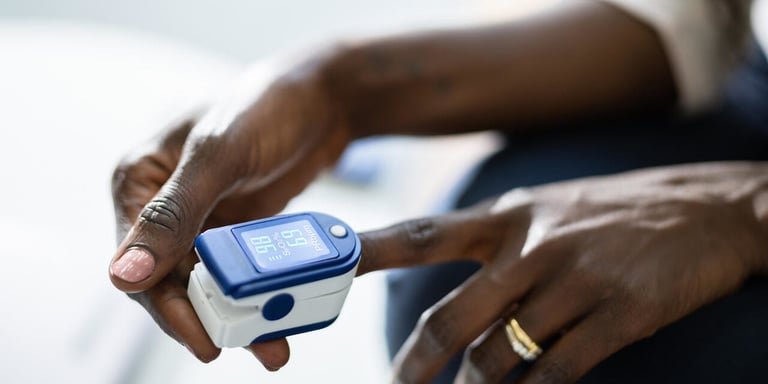

The study calls for better representation in medical device development and in the scientific process to reduce systemic bias and healthcare inequities.
Using VA electronic health records from about 3.5 million emergency visits across 105 facilities (2014–2018), the analysis focuses on cases where pulse oximetry was recorded and follow-up decisions were analyzed.
The research team includes Marcella Alsan and Liran Einav (Stanford), Amy Finkelstein (MIT), and Jonathan Zhang (Duke); the VA dataset provides a large, diverse sample for examining this bias.
Bias in device design can affect healthcare decisions and amplify inequities, underscoring a need for bias-aware standards and alternative sensing approaches.
The FDA acknowledges the problem and calls for updated performance standards, while practical bias-free alternatives are not yet universally adopted; researchers are pursuing LED-based or green-light sensor approaches.
Calibration relying on predominantly light-skinned individuals and transmission-based measurements prompts exploration of bias-resistant alternatives like LED-based or green-light reflection sensors.
A Stanford study shows pulse oximeters overestimate oxygen saturation in darker-skinned patients, leading to fewer follow-up interventions for Black patients who have readings similar to white patients.
The overestimation stems from melanin’s effect on light absorption, with devices calibrated largely on light-skinned populations, causing readings to fail prompt concern for darker-skinned patients.
The report, from Stanford Health Policy and Stanford’s Freeman Spogli Institute, dated May 20, 2026, highlights policy implications of biased medical devices.
This bias is not a single erroneous reading but a chain that widens racial disparities in health outcomes through subsequent clinical decisions.
The bias propagates beyond a single reading, reducing downstream care and resulting in lower follow-up care and essential interventions like supplemental oxygen for Black patients.
The study, published in the Proceedings of the National Academy of Sciences, shows how bias in device design propagates through clinical decisions, contributing to care disparities.
Summary based on 2 sources
Get a daily email with more Science stories
Sources
Stanford University
Pulse oximeter bias linked to gaps in care for Black patients
Stanford Institute for Economic Policy Research (SIEPR) • May 20, 2026
How a biased medical device is widening the racial health gap