Duke Researchers Target Mitochondrial Health to Revolutionize Chronic Nerve Pain Treatment
May 24, 2026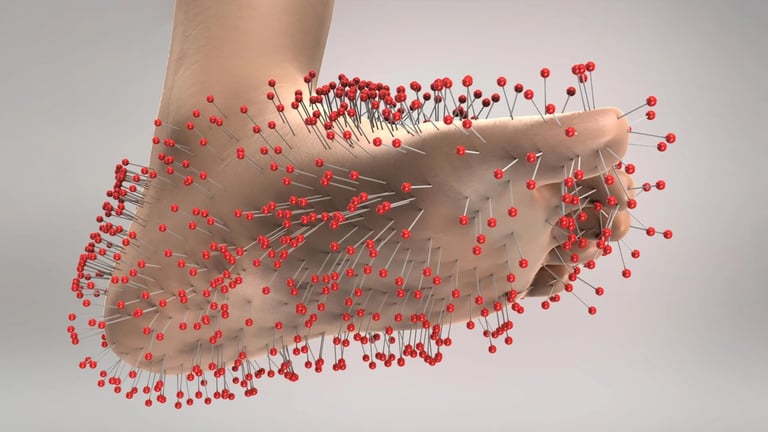

The results show that increasing mitochondrial exchange can substantially alleviate chronic pain in animal models.
Direct injections of healthy mitochondria into the dorsal root ganglia reduced pain, while mitochondria from diabetic donors did not provide benefit, highlighting mitochondrial quality as crucial.
The effectiveness depended on the mitochondria being healthy, with diabetic-derived mitochondria failing to relieve pain.
In mice, enhancing mitochondrial transfer reduced pain-related behaviors by up to half, underscoring the therapeutic potential of promoting energy-sharing between glial cells and neurons.
Disruption of mitochondrial transfer from satellite glial cells to neurons may contribute to nerve deterioration and pain symptoms.
The approach centers on repairing damaged nerves by reestablishing mitochondrial health, offering a mechanism that goes beyond traditional pain-signal suppression.
A key protein, MYO10, was identified as essential for forming tunneling nanotubes that enable mitochondria movement between cells, pointing to a specific molecular target for future therapies.
Satellite glial cells were found to transfer healthy mitochondria to sensory neurons via tunneling nanotubes, a process whose disruption is linked to nerve degeneration and pain.
Duke University School of Medicine researchers are pursuing a potential new treatment for chronic nerve pain by restoring healthy mitochondria in nerve cells, addressing the root energy deficiency rather than just blocking pain signals.
Researchers stress the need for advanced imaging and further work to visualize mitochondrial transfer in living tissue before translating findings into clinical treatments.
Future studies should focus on understanding the mechanism of nanotube-mediated transfer and developing imaging tools to observe delivery in real time, guiding potential therapies for chronic pain.
Researchers highlighted MYO10 as critical for creating tunneling nanotubes that permit mitochondrial transfer among cells.
Summary based on 2 sources
Get a daily email with more Science stories
Sources

ScienceDaily • May 24, 2026
Scientists “recharge” damaged nerves to ease chronic pain
SSBCrack News • May 24, 2026
Duke Researchers Uncover New Approach to Treat Chronic Nerve Pain by Restoring Healthy Mitochondria -