China Tests Human Stem Cell Embryos in Space to Study Early Development and Reproductive Challenges
May 25, 2026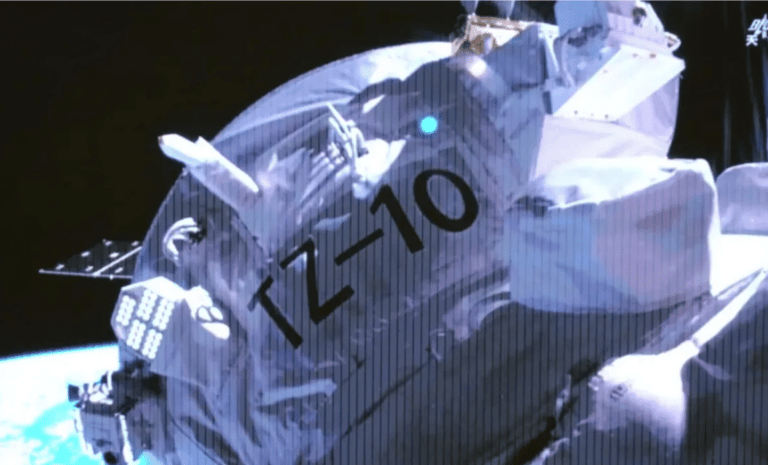

The embryo-like structures are being studied aboard the space station by Chinese astronauts as part of ongoing space biology experiments tied to China’s broader space program.
The research aims to understand how microgravity and cosmic radiation impact early human development, with potential implications for future self-sustaining lunar or Martian colonies.
China launched artificial embryo-like structures built from human stem cells to the Tiangong space station aboard the Tianzhou-10 resupply mission to study early human development in microgravity.
Two types of embryo models—peri-implantation and peri-gastrulation—were grown for five days in orbit before being frozen for return, providing insights into early development under space conditions.
Researchers are examining a developmental window roughly 14 to 21 days after fertilization, a critical period when organ formation begins and abnormalities can affect fetal outcomes.
Long-term implications include exploring advanced reproductive techniques for space populations and assessing how space conditions might influence conception and early growth.
A key goal is to map the critical window of organ formation and body axis establishment under space conditions to inform safe off-Earth reproduction.
Researchers note that the artificial embryos cannot develop into fetuses, enabling ethical study of early development and informing reproductive challenges for long-duration space habitation.
Earth-based control samples were cultured in parallel to compare space versus ground development and identify factors affecting embryogenesis in space.
Control embryos cultured on Earth serve to isolate space-specific factors influencing embryonic growth and development.
The overarching aim is to inform protocols for growing humans off-world, assess risks to early development, and guide future space policy, medical procedures, and mission planning.
Samples included two development models—one simulating embryo attachment to uterine tissue and a microfluidic chip model of cellular reorganization—developed for five days in orbit before freezing for return and analysis.
Summary based on 3 sources
Get a daily email with more Science stories
Sources
Gizmodo • May 25, 2026
China Launched Artificial Embryos to Orbit to Find Out If We Can Have Space Babies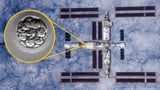
Live Science • May 24, 2026
China launches 'human artificial embryos' to space in bid to see whether reproduction is possible off-world
The Daily Galaxy - Great Discoveries Channel • May 25, 2026
China Sends Human Artificial Embryos To Space To Study Reproduction Beyond Earth