Study Unveils How Neural Progenitor Aging Shapes Brain Evolution and Species-Specific Development
May 26, 2026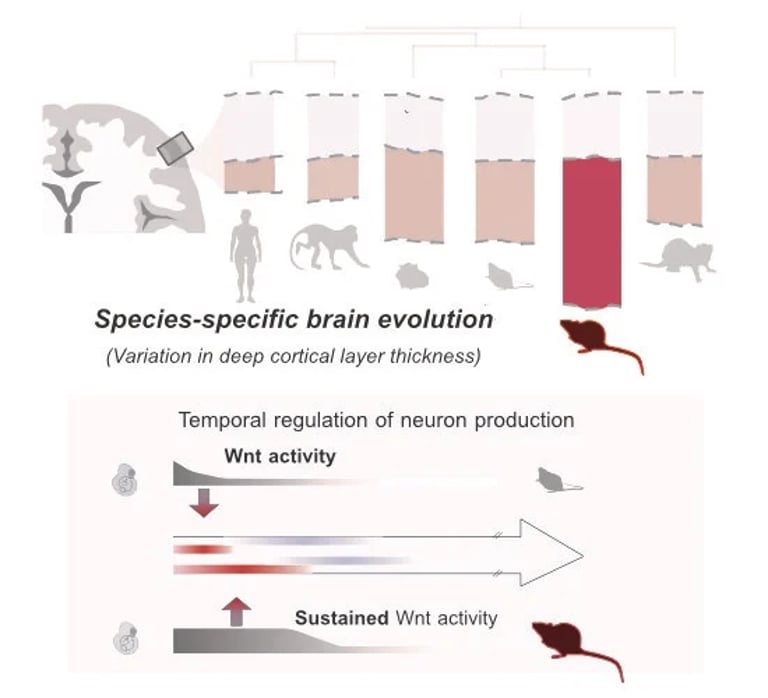

Methodologically, the work uses cross-species comparisons, lineage tracing, gene expression profiling, and cell labeling to link signaling dynamics with neuronal outcomes.
The article, titled “Interspecific diversity in the neuronal composition of the mammalian cortex arises from heterochrony in neurogenesis,” appears in The EMBO Journal (DOI: 10.1038/s44318-026-00806-z).
The study shows that aging rates of neural progenitor cells play a pivotal role in shaping cortical architecture, contributing to species-specific brain development and potential targets for developmental disorders.
By illustrating heterochrony, the research highlights developmental timing shifts as a driver of cortical diversification and suggests manipulating progenitor aging could influence brain evolution.
Across species, a cellular timing mechanism governs the proportional layout of the mammalian cortex by altering neural progenitor aging during early development.
Evolutionary context suggests rat-specific thickening of the deep cortical layer may reflect unique neural circuit specializations, inviting study of how anatomy maps to behavior and sensory processing.
Comparative analyses show heterochronic adjustments change cortical layer proportions in a species-specific way without disrupting the cortex’s overall laminar framework.
The findings are published in The EMBO Journal under the title Interspecific diversity in the neuronal composition of the mammalian cortex arises from heterochrony in neurogenesis, DOI 10.1038/s44318-026-00806-z.
Rats exhibit a prolonged neurogenic window, producing more deep-layer neurons than mice, which switch earlier to upper-layer neuron production.
Osaka University research indicates signaling timing during brain development shapes the ratio of deep-layer to upper-layer neurons, contributing to species differences in cortical structure.
Extended rat neurogenesis correlates with prolonged expression of Wnt signaling genes, which regulate the timing of cortical development.
These findings offer insights into mammalian brain evolution and have potential implications for developmental and neurological disorders, with relevance to regenerative medicine.
Summary based on 4 sources
Get a daily email with more Science stories
Sources

Neuroscience News • May 26, 2026
Progenitor Cell Aging Rates Dictate Brain Layer Proportions
EurekAlert! • May 25, 2026
The secret ingredient is time: The role of timing in brain development
BIOENGINEER.ORG • May 26, 2026
Timing is Everything: Unlocking the Secret to Brain Development
Asia Research News • May 26, 2026
The secret ingredient is time: the role of timing in brain development