AI-Powered Pan-Cancer Atlas Unveils Immune Structures' Role in Personalized Cancer Therapy
May 28, 2026


Tumor TLSs are diverse in maturation, location, and organization, shaping local immune programs and tumor cell states across cancers.
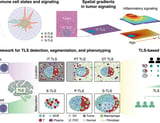
Researchers built a pan-cancer atlas by merging spatial transcriptomics with AI on pathology, revealing a maturation continuum of TLSs from early states to secondary follicle–like structures and their distinct intratumoral niches.
TLS maturation aligns with coordinated immune organization, including B and T cell zoning, dendritic networks, cytokine signaling, and interferon responses.
The study highlights the value of integrating spatial multi-omics, AI, and digital pathology to enable real-time patient stratification and personalized oncology care.
Authors advocate incorporating TLS features into future immuno-oncology trials as a stratifier or endpoint and propose longitudinal sampling and refined TLS profiling to test causal mechanisms.
Key implications include validating a TLS composite score for prospective trials and embedding TLS profiling into routine pathology, while exploring how to promote TLS maturation and spatial interactions with tumor cells for therapy.
A composite TLS score, reflecting maturation and spatial context, shows promise as a biomarker to guide immunotherapy decisions and predict response.
The work was led by Dr. Linghua Wang at UT MD Anderson, published in Science, supported by NIH/NCI, CPRIT, Break Through Cancer, and partners.
The Science study analyzed over 3,000 samples, classifying TLSs by maturation, cellular makeup, and spatial relation to tumor and stroma, forming a framework for TLS profiling.
Researchers developed scalable AI pipelines to detect, profile, and classify TLSs from spatial omics data and standard pathology slides for rapid, scalable analysis.
An AI framework can identify and categorize TLSs directly from routine H&E slides, enabling scalable clinical TLS profiling across thousands of slides and external cohorts.
Another AI model trained on 3,071 whole-slide images demonstrates the ability to predict TLS maturation directly from standard pathology.
Summary based on 3 sources
Get a daily email with more AI stories
Sources
Science • May 28, 2026
Pan-cancer spatial atlas of tertiary lymphoid structures
BIOENGINEER.ORG • May 28, 2026
AI-Driven Atlas Uncovers Novel Prognostic and Therapeutic Insights into