Gravitational Astronomy Enters New Era with Record 161 Events Detected, Precision Improves
May 28, 2026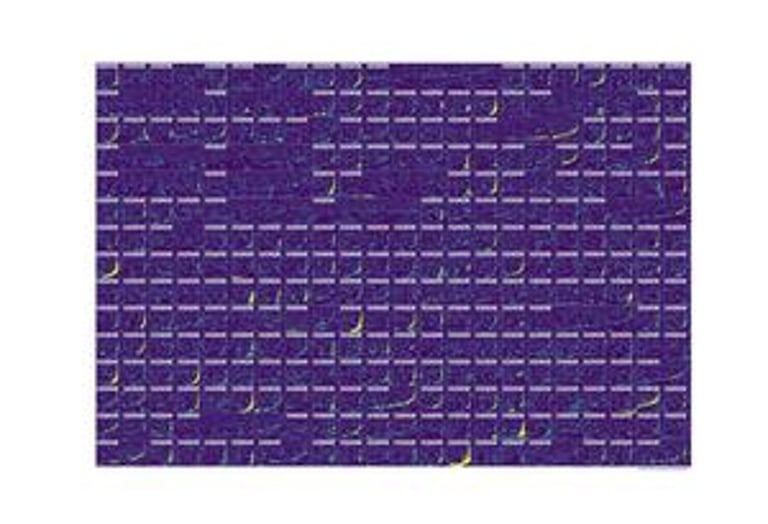

The LVK collaboration stresses ongoing observing runs interleaved with detector upgrades, signaling a shift from discovery to precision gravitational astronomy through larger, more sensitive datasets.
Efforts to optimize detectors continue, with expectations of still deeper insights as sensitivity improves and more data accumulate.
A record 161 events were detected from April 2024 to January 2025, bringing the total confirmed events to 390 since 2015.
Gravitational-wave astronomy is moving from initial discoveries to precision measurements, expanding scientists’ ability to analyze and interpret cosmic events.
A new era dubbed the 'age of gravitational astronomy' is emerging as LVK collaborators detect an increasing number of precisely measured gravitational-wave events.
The updated GW catalog yields a Hubble constant of about 71.0 km s‑1 Mpc‑1 with roughly 25% improved precision, consistent with other measurements but not yet resolving current tensions.
Experts like Mario Spera note that each new catalog enriches understanding of black-hole births, evolution, and mergers, with discoveries rising as detector sensitivity improves.
Recent detections include GW240615 with precise localization, GW250114—the strongest signal-to-noise yet—and GW241011/GW241110 suggesting second-generation black holes from mergers in dense environments.
Evidence of second-generation black holes in GW241011 and GW241110 points to mergers involving remnants from prior mergers, likely within stellar clusters.
GW250114 stands out as the clearest signal, a merger of 32- and 34-solar-mass black holes over a billion light-years away, enabling tests of general relativity and multi-tone constraints on black-hole properties.
GWTC-5, in concert with GWTC-4, shows about 75% of all observed events are in the latest update, reflecting upgraded sensitivity and higher event rates.
Gravitational Wave Transient Catalogue-5.0 (GWTC-5) covers events from that period, reinforcing the surge in detections and the cumulative reach of the catalog.
Summary based on 2 sources
Get a daily email with more Science stories
Sources
EurekAlert! • May 26, 2026
The new LIGO–Virgo–KAGRA Catalog sets new records in precision gravitational astronomy
Scientific American • May 28, 2026
The ‘age of gravitational astronomy’ is here