World's Largest Permafrost Crater Expands, Unveils Prehistoric Secrets Amid Climate Concerns
June 1, 2026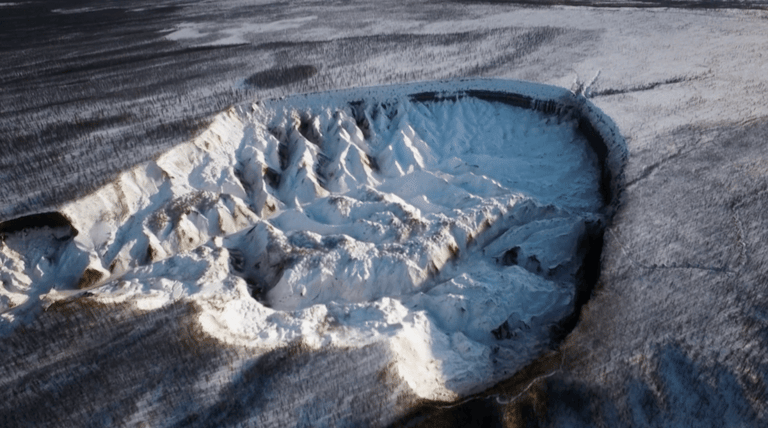

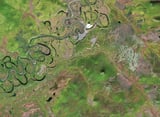
Copernicus Sentinel-2 imagery captures Batagaika Crater, emphasizing its status as the world’s largest permafrost crater created by melting permafrost, known as a mega-slump.
Since the 1990s, the megaslump has mobilised about 35 million cubic meters of ground, with permafrost thaw accelerated as more ground is exposed to warming.
Nearby Batagay town, with just over 4,000 residents, lies to the northwest along the Yana River, which courses across Russia and shapes the landscape through sediment deposition and erosion.
The thawing permafrost has unearthed prehistoric remains, including a 50,000-year-old baby mammoth found in 2024 and an extinct horse (Equus lenensis) discovered in 2018, noted for containing the oldest liquid blood on record.
The feature is rapidly expanding, currently about 81 hectares in area, roughly 800 meters wide, 50 meters deep, and about 1 kilometer long, with its area tripling from 1991 to 2018 and fastest growth between 2010 and 2014.
The thaw releases an estimated 4,000–5,000 tons of carbon annually, creating a positive feedback loop that accelerates climate warming.
The crater is roughly 100 meters deep and about 1 kilometer long, expanding at around 30 meters per year due to deforestation and warmer temperatures that melt and drain ice, leaving subsiding sediments.
Deforestation in the 1950s–1960s removed canopy cover, exposing permafrost to warmer conditions and triggering sustained thaw and geological instability.
The surrounding tundra around the crater is green with shrubs and larch, while the crater slopes are largely barren and brown.
The Batagay crater sits in the Sakha Republic and is sometimes labeled the “Doomsday Glacier” or “Gateway to Hell,” underscoring its imposing scale and Arctic impact.
The Batagay (Batagaika) crater in northeast Siberia is the world’s largest megaslump—a thaw-related landslide formed after mid-20th century deforestation exposed permafrost, not a meteor crater.
thawing permafrost releases methane and carbon dioxide, contributing to greenhouse gas emissions and illustrating a warming planet, with occasional Ice Age fossils and mummified wildlife found in the area.
Summary based on 2 sources
Get a daily email with more Science stories
Sources
Earth from Space: Batagaika Crater
Earth from Space: Batagaika Crater
Discover Wildlife • Jun 1, 2026
Siberia’s ‘Gateway to Hell’ is unearthing prehistoric animals. And it’s still rapidly growing