New Dinosaur Discovery Jian changmaensis Reveals Prehistoric Bird Predation in Early Cretaceous China
June 4, 2026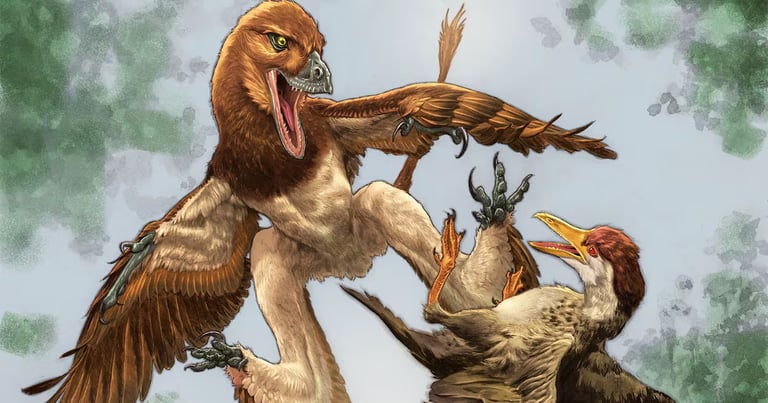

Changma Basin has yielded many ancient bird fossils, and Jian changmaensis stands out as the only non-bird predator at the site, offering new insight into ecosystem dynamics and predator–prey relationships of that era.
A newly identified dromaeosaurid dinosaur named Jian changmaensis from the Changma Basin in Gansu Province, northwestern China, provides the first fossil evidence that a non-avian theropod preyed on early birds in the Early Cretaceous, around 120 million years ago.
Dr. Lamanna notes the find adds crucial ecological context, confirming non-avian dinosaurs inhabited the Changma Basin, an area rich in fossil birds, and shedding new light on the ecological history and avian evolution in the region.
Researchers hypothesize that this species hunted by snatching early birds from the sky, likely maneuvering through lakeside forested environments.
The specimen supports the idea that microraptorans used a four-winged gliding mechanism, an intermediate stage in the evolution of avian flight and a key piece in understanding predator–prey dynamics with early birds.
Microraptors, while not capable of powered flight, possessed feathered adaptations enabling gliding, highlighting early flight-related capabilities.
Understanding Jian’s ecology helps reconstruct ancient food webs and predator–prey dynamics, illuminating the evolutionary pressures shaping early bird survival and flight adaptations.
Jian changmaensis was roughly the size of a barn owl and likely capable of gliding between trees, indicating arboreal predatory behavior more birdlike than previously understood.
Size estimates place Jian changmaensis within the microraptorine range, and it may have preyed on birds like Gansus yumenensis at the site.
Researchers plan to further analyze Jian changmaensis’s wing to better understand flight or gliding capabilities and to scan the wing for more detailed functional insights.
The species name honors the Changma Basin and references a mythical one-winged bird, underscoring its birdlike traits and potential arboreal lifestyle.
The research was a collaborative effort among The Field Museum and the Carnegie Museum of Natural History, with findings published in the Annals of the Carnegie Museum after thorough fossil excavation, comparative anatomy, and phylogenetic analysis.
Summary based on 6 sources
Get a daily email with more Science stories
Sources
Scripps News • Jun 4, 2026
Fossil reveals bizarre gliding creature that hunted birds 120 million years ago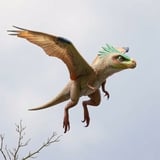
BIOENGINEER.ORG • Jun 4, 2026
Newly Discovered Velociraptor Relative Likely Glided on Four Wings and