Hidden Fungal Networks: Key to Climate Regulation and Soil Health Mapped Globally
June 11, 2026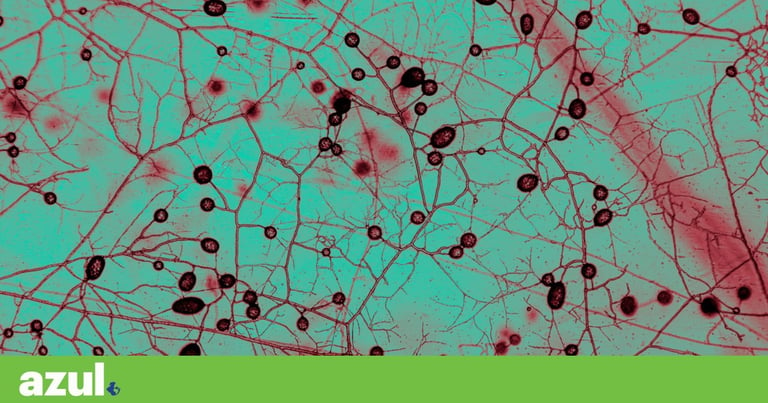


A global study published in Science maps arbuscular mycorrhizal fungi networks that connect with over 70% of plants and have formed for roughly 475 million years, underscoring their key role in nutrient and water exchange as well as carbon sequestration in soils.
These fungal networks contribute to climate regulation by sequestering about four billion tons of CO2 in soil annually, roughly 11% of human-emitted CO2, while also providing soil structure that supports vast underground biodiversity.
A global digital map reveals an extensive underground web of arbuscular mycorrhizal fungi spanning thousands of kilometers of carbon-rich thread networks beneath the Earth's surface.
Researchers note substantial regional variations across deserts, tropical forests, grasslands and croplands, complicating direct measurements and prompting an integrated approach to estimate hyphal density.
Grasslands host the densest hyphal systems, with ecosystems like the Everglades, Sudd and prairie/steppe showing exceptionally high density, while many areas remain poorly protected and degraded.
The analysis highlights under-sampled regions and data gaps, calling for more empirical work to understand distribution, vulnerability and the role of these networks in Earth's functioning.
Experts propose practical actions to rebuild fungal biomass, such as adding fungal spores, reducing tillage and minimizing chemical inputs to boost soil health and long-term crop productivity.
Researchers analyzed 16,000 soil samples from 322 studies and over 300,000 measured hyphae to estimate total biomass and carbon storage, extrapolating findings to under-sampled regions like deserts and tundra.
An interactive Mycorrhizal Infrastructure Map was released to visualize these estimates at a 1 km2 scale, excluding polar zones and data-deficient areas.
Cropland soils show a 47.3% reduction in fungal network density compared with wild ecosystems, highlighting the impact of agricultural practices on these networks.
About 40% of these fungi live in grassland ecosystems, with notably lower network densities in croplands by roughly half, compared with uncultivated lands.
Azole antifungals have been shown to reduce fungal hyphae density and beneficial root colonization, raising concerns about agricultural practices affecting these networks.
Summary based on 5 sources
Get a daily email with more World News stories
Sources
The Guardian • Jun 11, 2026
Subterranean fungi networks more than 100 quadrillion km in length, study finds
Environment • Jun 11, 2026
Fungi take up more mass than people—see how they stretch across the Earth
New Scientist • Jun 11, 2026
Global map reveals the vast scale of underground fungal networks