MIT Develops World's Smallest Ingestible Sensor for Continuous Core Temperature Monitoring
June 15, 2026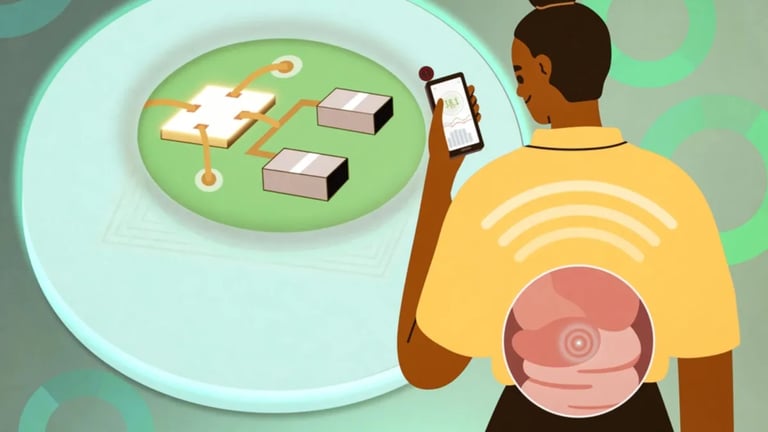


A MIT-led team has developed MITS, the tiniest ingestible sensor to date, a blueberry-sized device capable of continuously measuring core body temperature from inside the GI tract.
Long-term monitoring scenarios include endoscopic deployment, daily wireless data collection, and GI transit from stomach to excretion over several days, with robust performance in harsh GI environments.
Future directions include adding multi-modal sensing (pH, pressure, biochemical markers), exploring veterinary and environmental monitoring, and pursuing scalable, cost-effective manufacturing.
The device is significantly smaller than existing ingestible thermometers to reduce obstruction risk and ease swallowing, while delivering high-precision readings.
In essence, MITS is a scalable, ultra-low-power sensor that can provide continuous internal temperature monitoring with broad clinical and operational implications for healthcare and related fields.
Applications span personalized medicine, circadian and metabolic studies, sports medicine, telemedicine, and remote patient monitoring, including post-pandemic contactless diagnostics.
Funding comes from DARPA, ARPA-H, and the 711th Human Performance Wing, with researchers noting the views are their own and not official policy.
The project is documented in Nature Electronics and involves collaboration with ongoing development toward broader clinical and consumer applications.
The wireless system emphasizes ultra-low power use, potential energy harvesting or micro-battery support, and data security via encryption to protect health information.
Validation in animals shows accurate continuous temperature data transmission both under anesthesia and during movement, with results aligning closely to gold-standard measures.
Data is transmitted by backscattering to an external high-frequency antenna, enabling readings every second without a power-hungry onboard transmitter.
Potential applications include infection monitoring, perioperative thermoregulation, fertility studies via core temperature, and at-home fever or performance monitoring for athletes.
Summary based on 5 sources
Get a daily email with more Tech stories
Sources

MIT News | Massachusetts Institute of Technology • Jun 15, 2026
A tiny ingestible sensor can measure temperature from inside the body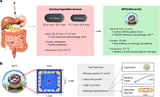
Nature • Jun 15, 2026
A miniaturized ingestible temperature sensor for continuous internal monitoring
BIOENGINEER.ORG • Jun 15, 2026
MIT Researchers Create Miniature Ingestible Sensor for Internal Body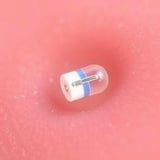
BIOENGINEER.ORG • Jun 15, 2026
Miniature Ingestible Sensor Enables Continuous Internal Temperature