New Fossil Study Challenges Fish-to-Tetrapod Evolution Theory, Highlights Citizen Science Impact
June 18, 2026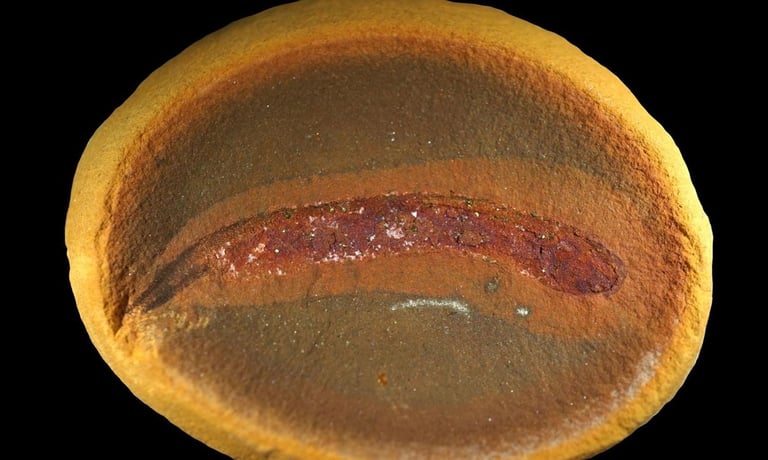

A new fossil study challenges the long-held fish-to-tetrapod narrative by suggesting the first land-dwelling vertebrates did not originate from amphibian-like ancestors with tadpoles.
Researchers analyzing two small embryo embolomeres from Mazon Creek in Illinois identify them as early tetrapod hatchlings that show no tadpole-like metamorphosis.
The hatchlings lack external gills and other metamorphosis indicators, effectively falsifying the idea of an ancestral larval phase typical of amphibians.
Citizen scientists and amateur collectors contributed to the discovery, with non-professional donations helping build the study’s dataset.
The project highlights how citizen science and collaboration with multiple institutions and volunteers can advance paleontological research.
The article also calls for exploration of Australia’s fossil frontier, citing a fossil-hunting expedition in the outback to uncover more about Earth’s ancient history.
The piece emphasizes that science advances by confronting questions when new evidence upends established concepts, rather than presenting final answers.
Findings rely on Mazon Creek fossils and the collaboration with the Field Museum and the Canadian Museum of Nature, underscoring the importance of fossil evidence in reassessing theories.
The study’s implications extend to our understanding of vertebrate evolution, showing that non-lab discoveries can reshape scientific narratives.
Scanning electron microscopy helped confirm the embryos’ status at the Canadian Museum of Nature.
The discoveries center on tiny embryos preserved in ironstone nodules at Mazon Creek, preserving delicate juvenile features often lost to decay.
The fossils offer rare, well-preserved views of early tetrapod life, including preserved eyes, skin, and color patterns, beyond skeletal remains.
Summary based on 6 sources
Get a daily email with more Science stories
Sources
A-Z Animals • Jun 18, 2026
How New Fossil Discoveries Just Rewrote the History of Land Life
New Scientist • Jun 18, 2026
Remarkable fossils rewrite the story of how animals conquered the land
Talker • Jun 18, 2026
Fossilized babies of ancient predators show how life on Earth was like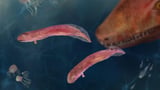
Popular Science • Jun 18, 2026
Baby crocodile-like fossils just blew up a long-held evolution theory