Erucamide Shows Promise in Slowing Retinal Degeneration, Activates Immune Cells for Neurovascular Stability
June 22, 2026

The researchers engineered functionalized porous silicon nanoparticles (pSiNPs) to load and deliver hydrophobic erucamide intravitreally, enabling in vivo retinal distribution and efficacy.
Erucamide binds to a protein called TMEM19; reducing TMEM19 levels blocks erucamide’s protective effects, indicating TMEM19 is required for activating the myeloid-mediated protective response.
The protective effect arises not by directly saving photoreceptors but by engaging CD11b+ myeloid immune cells, which then release signals that support nerve cells and blood vessels.
Erucamide levels decline as photoreceptors die, but restoring it activates immune cells in the retina that help stabilize neurovascular functions and slow degeneration.
While not reversing damage, the erucamide pathway slows degeneration by reinforcing the retina’s tissue-wide response to injury, offering a potential new strategy for retinal diseases such as diabetic retinopathy, retinitis pigmentosa, and age-related macular degeneration.
The findings come from multiple preclinical models and were published in Nature Neuroscience on June 19, 2026, with broader context provided by institutional press and open-access original research.
Human relevance is supported by detection of erucamide in human retinal tissue and the upregulation of pro-angiogenic and neurotrophic factors in human iPS-derived macrophage precursors treated with erucamide, suggesting translational potential.
Future directions include clarifying the full signaling pathway, testing erucamide signaling across retinal diseases, improving ocular delivery due to erucamide’s hydrophobicity, and exploring modified or related lipids that may be more effective.
Future work will refine delivery methods, test modified erucamide analogs, and explore whether related lipids could provide stronger or more durable protective effects.
Researchers delivered erucamide using engineered porous silicon nanoparticles to overcome its hydrophobicity, enabling stable, uniform distribution within the eye and controlled release.
Delivery was achieved using porous silicon nanoparticles to stabilize and distribute erucamide in the eye, enabling it to act on CD11b+ myeloid immune cells rather than directly on photoreceptors.
Summary based on 4 sources
Get a daily email with more Science stories
Sources

Neuroscience News • Jun 22, 2026
Lipid Molecule Slows Progressive Retinal Degeneration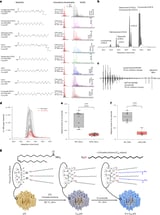

EurekAlert! • Jun 22, 2026
Newly identified molecule strengthens the eye’s response to damage in retinal disease
News-Medical • Jun 22, 2026
Natural molecule erucamide helps slow progressive retinal degeneration