Massive Viking Textile Hub Uncovered in Denmark Reveals Advanced Industrial and Trade Networks
June 24, 2026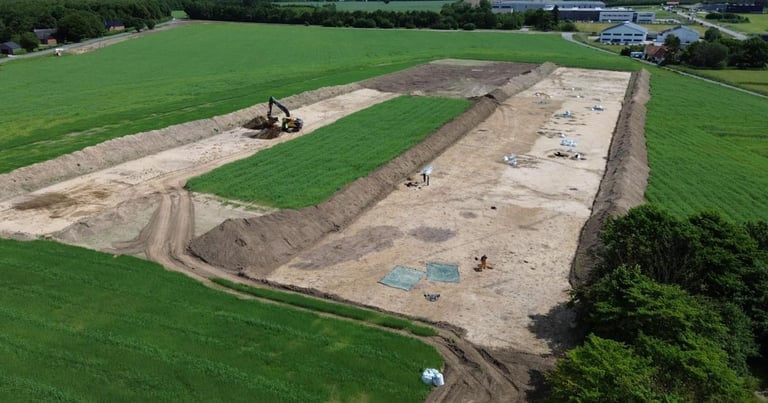


A large Viking Age textile production site has been uncovered in Soften, Denmark, dating to AD 600–950 and spanning about 100,000 square meters, with a dedicated flax processing area and evidence of organized workshops.
The site includes more than 80 pit houses used as workshops and dwellings, indicating centralized resource control and a sophisticated industrial setup.
The Soften find, alongside nearby sites, indicates the area was part of a larger economic and political Viking network with regional and international trade links.
Researchers plan carbon dating and pollen analysis to refine the specifics of textile production and place the site in its environmental context within the regional economy.
Artifacts recovered—spindle whorls, weight looms, silver coins, glass beads, and pottery—point to specialized craft production and broader trade connections.
The presence of a flax-processing area, multiple production spaces, and a single residential building suggests centralized production governance by an influential figure.
The dig, led by a Moesgaard Museum archaeologist, emphasizes that the site's textile focus distinguishes it from other contemporary settlements.
Overall, the discoveries illustrate that Viking society was highly organized and capable of large-scale, market-oriented production beyond the stereotype of raiders.
Summary based on 6 sources
Get a daily email with more World News stories
Sources

AP News • Jun 24, 2026
Huge Viking textile production site found in Denmark | AP News
Yahoo News • Jun 24, 2026
Archaeologists find huge Viking textile production site in Denmark
ABC News • Jun 24, 2026
Archaeologists find huge Viking textile production site in Denmark
Oxford Mail • Jun 24, 2026
Archaeologists find huge Viking textile production site in Denmark