Astronomers Discover 'Cotton Candy' Exoplanets Among Largest, Puffiest Known
June 25, 2026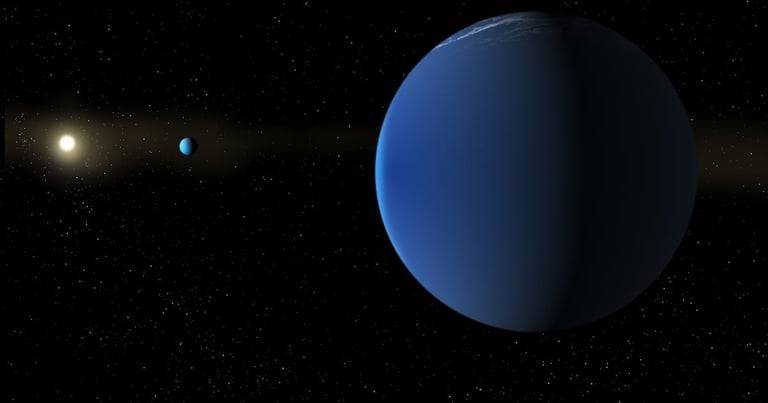

Astronomers have identified two enormous exoplanets, comparable in size to Jupiter, but with extremely low densities—lighter than cotton candy—making them among the largest known planets by size with such low density.
The pair orbits a Sun-like star in the Volans constellation, about 1,110 light-years away, and were detected thanks to NASA's TESS mission over roughly a decade of observations.
Their densities are exceptionally low, measured at about 0.022 and 0.027 ounces per cubic inch, while maintaining Jupiter-sized radii.
The discovery offers important insights into planet formation and the diversity of planetary systems in the cosmos.
Findings are published in Monthly Notices of the Royal Astronomical Society, with the Associated Press Health and Science Department distributing the story.
Future work includes continued study of these planets, with the James Webb Space Telescope potentially providing more data to understand their nature.
The discovery leveraged transit observations from TESS and was extended by long-baseline data spanning about 1,122 days collected from high Earth orbit.
Researchers aim to study the system’s dynamics and atmospheric composition to unravel how such ultra-low-density giants form and evolve, and how their orbits were shaped by interactions.
One theory suggests super-puffs formed with thick hydrogen/helium envelopes farther out in colder regions of protoplanetary disks, though exact formation remains uncertain.
Oxford researchers describe these planets as primarily hydrogen and helium with cloudy atmospheres that may appear white or blue, and note that follow-up observations with the Webb telescope are needed to confirm their chemistry.
Analyses indicate the planets’ densities were determined from orbital data, supporting a fluffy, gas-dominated nature rather than solid surfaces.
These planets are among the puffiest known, challenging existing giant-planet formation theories and offering new clues about planetary system evolution and migration.
Summary based on 6 sources
Get a daily email with more Science stories
Sources
AP News • Jun 25, 2026
Astronomers find giant planets that are lighter than cotton candy | AP News
Yahoo News • Jun 25, 2026
Astronomers find biggest super-puff planets yet that are lighter than cotton candy
NASA Science • Jun 25, 2026
NASA's TESS Mission Reveals the “Puffiest” Planets Ever Found - NASA Science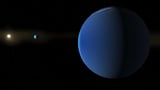
Popular Science • Jun 25, 2026
Two ‘super-puff’ planets are as wispy as cotton candy