Vera Rubin Observatory's Decade-Long Survey to Revolutionize Cosmology with 10TB Nightly Data Deluge
June 30, 2026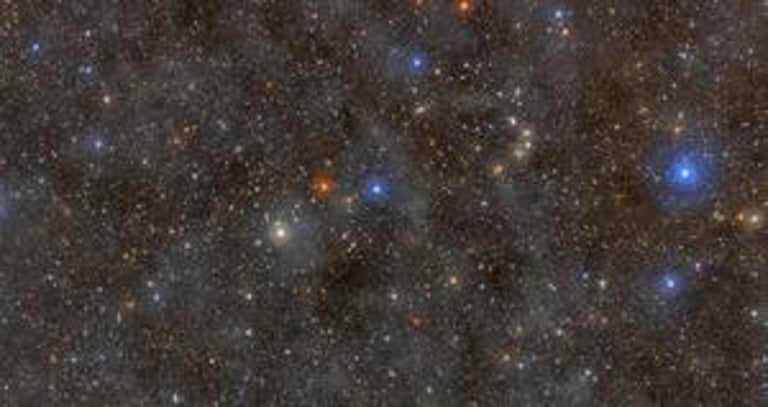


NSF Director and DOE Under Secretary emphasize federal investment and a new window on the universe, with Rubin inviting global participation in data and discoveries.
Milestones and collaborators include leadership from Brian Stone, Darío Gil, and Željko Ivezić, highlighting broad international collaboration, rapid data sharing, and public engagement.
Funding from the NSF and the DOE supports the observatory, named for Vera Rubin in recognition of her work revealing evidence for dark matter.
A key objective is real-time alerts for transient phenomena and moving objects, enabling rapid discovery of events like supernovae and asteroids, with millions of alerts signaling strong discovery potential.
Rubin emphasizes multi-messenger astronomy, coordinating global telescope networks for rapid follow-up of transient cosmic events.
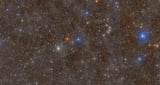
The Vera C. Rubin Observatory launches a ten-year Legacy Survey of Space and Time (LSST) to capture an ultra-wide, high-definition time-lapse record of the southern sky, with each point observed about 800 times over the decade.
Researchers anticipate enormous data flows — roughly 10 terabytes per night and up to 7 million alerts nightly — fed to automated brokers for rapid follow-up observations and discoveries.
Officials say Rubin Observatory will democratize data access, enable global participation in cutting-edge science, and mark a major leap in cosmology and astrophysics.
Leading voices stress that the project will expand knowledge, bolster scientific leadership, and illuminate the cosmos from the solar system to the structure of the universe.
Key scientific goals include studying dark energy, galaxy cluster evolution, and the matter distribution in the universe, with Rubin data helping constrain cosmology and galaxy formation.
Rubin will study Type Ia supernovae to map cosmic distances and expansion history, probe dark matter and dark energy with galaxy clusters, and chart billions of galaxies to understand cosmic evolution.
The release underscores Rubin’s broader mission across dark energy, dark matter, solar-system populations, and multi-messenger astronomy, while noting collaborations across Chile, Hawaiʻi, and Arizona, with involvement from CNRS/IN2P3 and LSST:UK.
Summary based on 15 sources
Get a daily email with more Tech stories
Sources
Yahoo News • Jun 30, 2026
The largest digital camera ever built begins decade-long survey of the universe
Phys.org • Jun 30, 2026
The largest digital camera ever built begins decade-long survey of the universe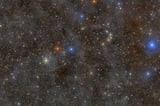
Stanford University
Rubin Observatory launches 10-year cosmic survey