Minnesota Team Unveils SpudCell: Pioneering Life-Like System Marks New Era in Synthetic Biology
July 1, 2026


A Minnesota team has built SpudCell, the first artificial system that completes a life cycle—growth, genome replication, division, and competition under natural selection—though it is not yet considered truly alive.
SpudCell gains resources by fusing with feeder liposomes that supply enzymes, ribosomes, and nutrients needed for protein synthesis and growth.
After about five divisions, SpudCells stop functioning due to a lack of self-sustained ribosome production, indicating ribosome biogenesis is the key hurdle to indefinite division.
The work is framed as a tool for studying the origins of life and as a platform for future applications such as cancer therapy, carbon capture, or chemical production, while acknowledging safety, security, and ethical considerations.
Potential impacts include enabling molecular transformations at biological temperatures, creation of therapeutic molecules and materials grown rather than synthesized, and broader open-engineering collaboration through Biotic.
Future efforts aim to improve ribogenesis, metabolism, and division robustness to make SpudCell a more practical platform for real-world uses.
Researchers envision a programmable chassis for synthetic biology capable of tasks like targeted drug delivery and environmental or medical applications, signaling a new era in bioengineering.
This project is presented as the starting point for a new age of synth biology and bioengineering, where life-like systems are built from known components rather than emerging from unknown processes.
Future versions could be programmable platforms for engineering biology, enabling synthetic cells designed from scratch for industry or medicine rather than modifying existing organisms.
John Glass of the J. Craig Venter Institute calls the development historically significant, while noting the public may not immediately grasp its importance.
Remaining challenges include consolidating seven plasmids into a stable genome, adding more molecular machinery, and establishing shared standards across labs to scale toward an engineering pipeline.
Practical deployment requires stabilizing the genome, expanding molecular machinery, and standardizing engineering methods for non-lab use.
Summary based on 18 sources
Get a daily email with more Startups stories
Sources
The Times Of India • Jul 1, 2026
Scientists create 'life': All you need to know about the SpudCell - why it matters & where it falls short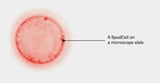
The New York Times • Jul 1, 2026
This Cell Feeds, Grows and Reproduces. And It’s Manmade.
The New York Times • Jul 1, 2026
SpudCell: Scientists Made a Cell With Most of the Hallmarks of Life. Here’s What to Know.
Futurism • Jul 1, 2026
Scientists Build Fully Synthetic Life Form That Can Eat and Reproduce