Breakthrough Study Reveals How Lung Cancer Hijacks Nervous System to Drive Cachexia, Suggests New Therapies
July 2, 2026

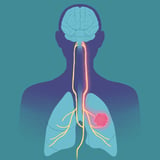
A new study led by a prominent cancer researcher identifies a mechanism by which a lung cancer subset drives cachexia by communicating with the brain through lung sensory neurons, effectively hijacking the nervous system.
The mechanism centers on the lipid signaling molecule prostaglandin E2 (PGE2); tumors produce elevated PGE2 levels, enabling tumor-to-brain signaling that spurs cachexia.
Disrupting this signaling by silencing lung sensory nerves or blocking PGE2 production—genetically or with NSAIDs like aspirin or ibuprofen—prevents cachexia in mouse models.
The Science paper, published on July 2, 2026, features a large multi-institution team including NYU, Harvard, Rutgers, Princeton, and Cold Spring Harbor, with funding from NIH, the American Cancer Society, Pfizer, and others.
The publication underscores broad collaboration across leading universities and funding from multiple organizations to support this breakthrough.
Cachexia affects roughly half of cancer patients globally and is linked to high mortality, with previous models lacking physiologic relevance until this study.
Researchers built physiologically relevant mouse models with tumors in appropriate locations and sizes to study cachexia and tumor-nervous system interactions more accurately.
These refined models enable clearer observation of how tumors communicate with the nervous system to drive cachexia.
The findings point to peripheral nervous system involvement in cancer cachexia as a novel and potentially translatable target, suggesting therapies that could improve cancer care and patients’ quality of life.
There are translational opportunities, including targeting nervous system pathways or PGE2 signaling, with possible repurposing of existing drugs like aspirin and ibuprofen and consideration of dietary patterns.
Senior author notes that tumors may hijack local lung sensory neurons to influence behavior and symptoms, highlighting a path toward new cancer care strategies.
Diet appears to modulate this tumor-brain communication: high-fat, high-calorie diets worsened cachexia, while reducing omega-6 fatty acids and boosting omega-3s lowered PGE2 production and tumor signaling, offering a potential dietary intervention.
Summary based on 3 sources
Get a daily email with more Science stories
Sources
Salk Institute for Biological Studies • Jul 2, 2026
Are lung cancer tumors hijacking the nervous system? - Salk Institute for Biological Studies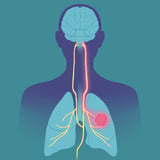
Salk Institute for Biological Studies • Jul 2, 2026
Are lung cancer tumors hijacking the nervous system? - Salk Institute for Biological Studies
Mirage News • Jul 2, 2026
Lung Cancer Tumors: Nervous System Hijack?