Astronomers Discover First Long-duration Radio Outburst in Distant Galaxy, Unveiling Early Universe Secrets
July 5, 2026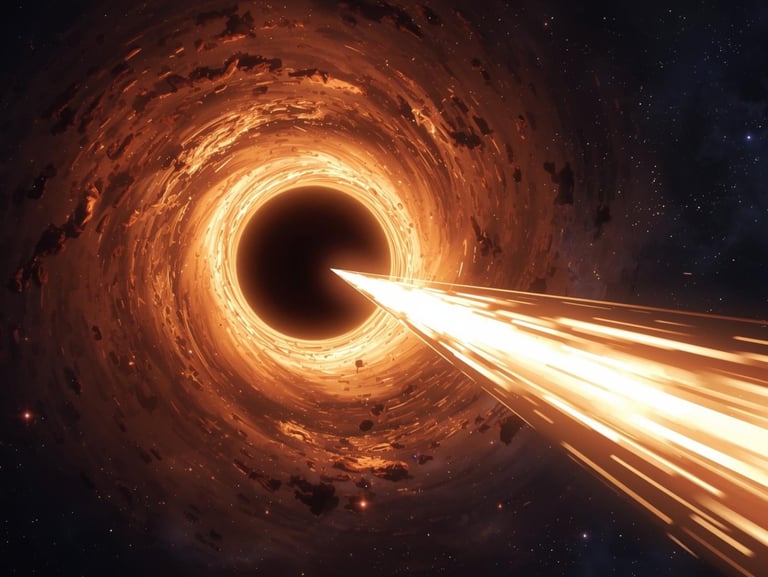

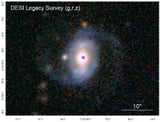
A long-lived, bright radio outburst has been observed in the spiral galaxy SDSS J110546.07+145202.4, about 1.8 billion light-years away in Leo, marking the first known source where a radio transient persists for years.
The same nearby spiral galaxy has shown unusually prolonged, bright radio emission for more than eight years, establishing it as a prototype of a new class of radio-changing galaxies.
The discovery is reported in The Astrophysical Journal (2026) by Stefanie Komossa and collaborators, highlighting the potential to identify similar transients in upcoming sky surveys to illuminate early-universe processes.
Future high-resolution observations with facilities like the VLBA and the upcoming SKA will map the jet structure and monitor the radio emission’s evolution over time.
Follow-up observations with Effelsberg, the Australia Telescope Compact Array, space-based instruments, and future arrays will help map the jet structure and track the emission over time.
Researchers suggest sustained accretion over several years triggers the jet, though the exact cause of the prolonged outburst remains under investigation.
The findings imply more material has been falling into the black hole for years, driving the jet, while the precise trigger and duration mechanism remain uncertain.
The galaxy serves as a local laboratory for studying mechanisms expected in the first galaxies of the early universe, due to rapid black hole growth and jet activity observed nearby.
The study proposes this object represents a rare phase of rapid black hole growth with luminous radio emission, resembling early-universe properties but observable locally.
Its relative proximity allows detailed study of jet formation and black hole growth, offering insights into early-universe black hole behavior.
Researchers led by Stefanie Komossa used new observations and archival data across radio to X-ray wavelengths to characterize the source and its unusually persistent radio brightness.
The work is published in The Astrophysical Journal (2026) under the title SDSS J110546.07+145202.4: The First Long-duration Radio Changing-look NLS1 Galaxy.
Summary based on 2 sources
Get a daily email with more Science stories
Sources
Phys.org • Jul 3, 2026
Long-lived radio outburst from black hole exhibits properties of the early universe
Phys.org • Jul 5, 2026
A nearby black hole as a window into the early universe